Loading
Every rug starts as a grid of squares.
A weaver reads the design off squared paper, one square to a knot, and ties the rug from the bottom up, one row at a time. Here is how that works, how it differs from tufting and machine weaving, and what to look for when you buy.
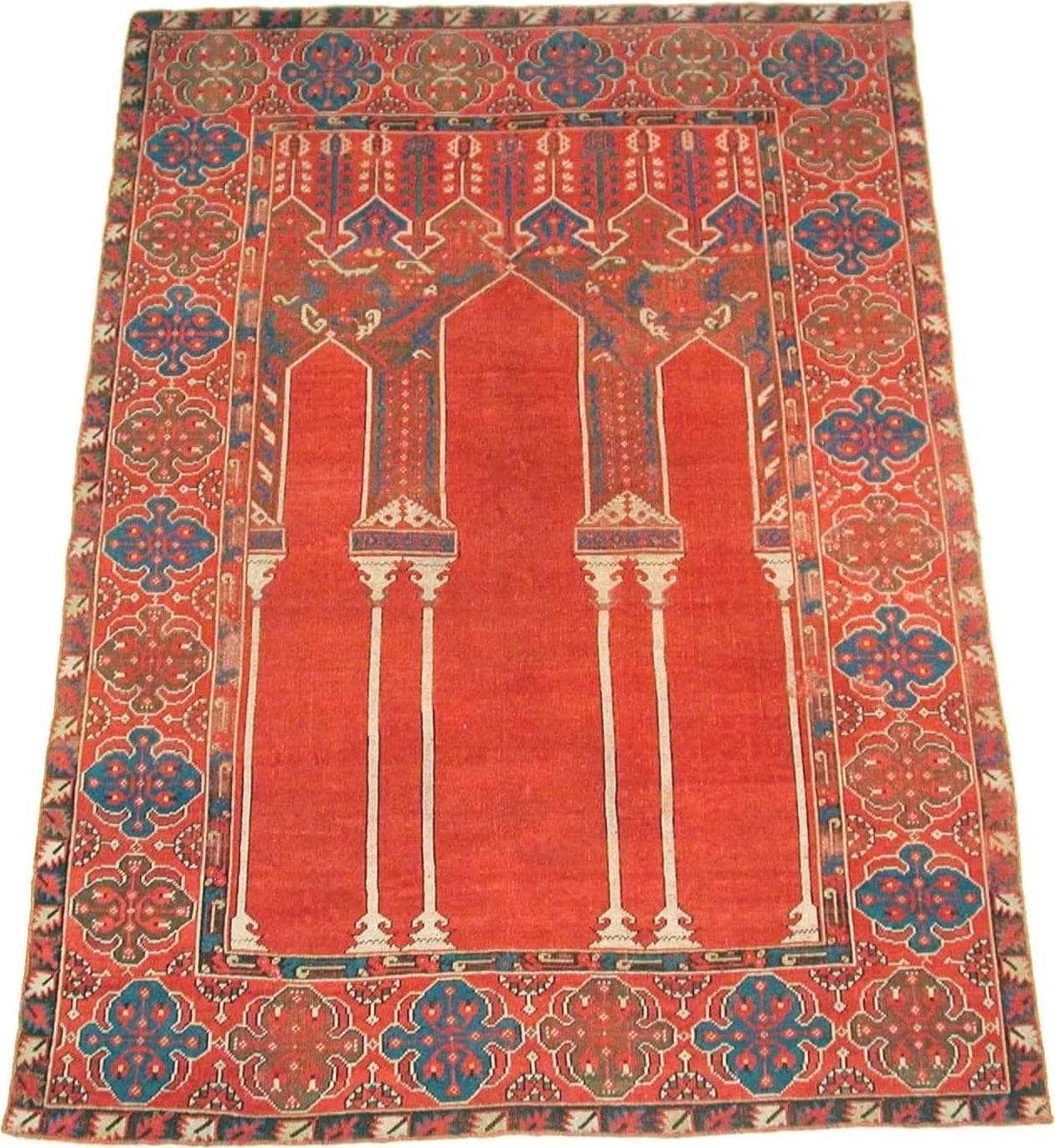
Ladik Triple ArchHand-knotted wool, Turkey, 80 knots per square inch
From₹74,900View rug: Ladik Triple Arch
Hand-knotted, from fleece to floor
Five stages, most of them by hand.
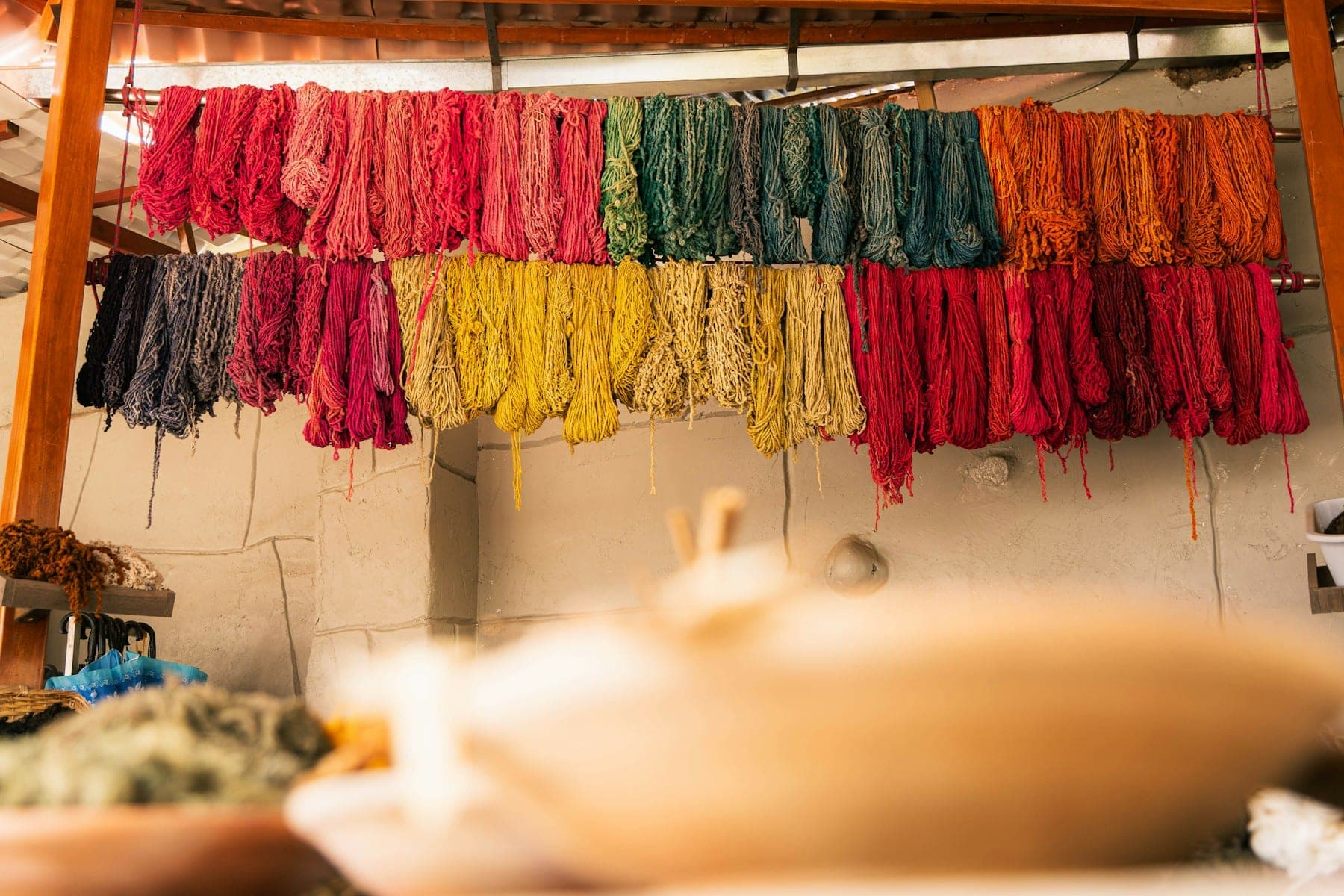
Step 1Dye
Wool is washed and dyed in small batches, with natural dyes such as madder and indigo or with stable synthetic ones. Each batch comes out slightly different, which gives hand-knotted rugs their gentle shifts of colour, called abrash.
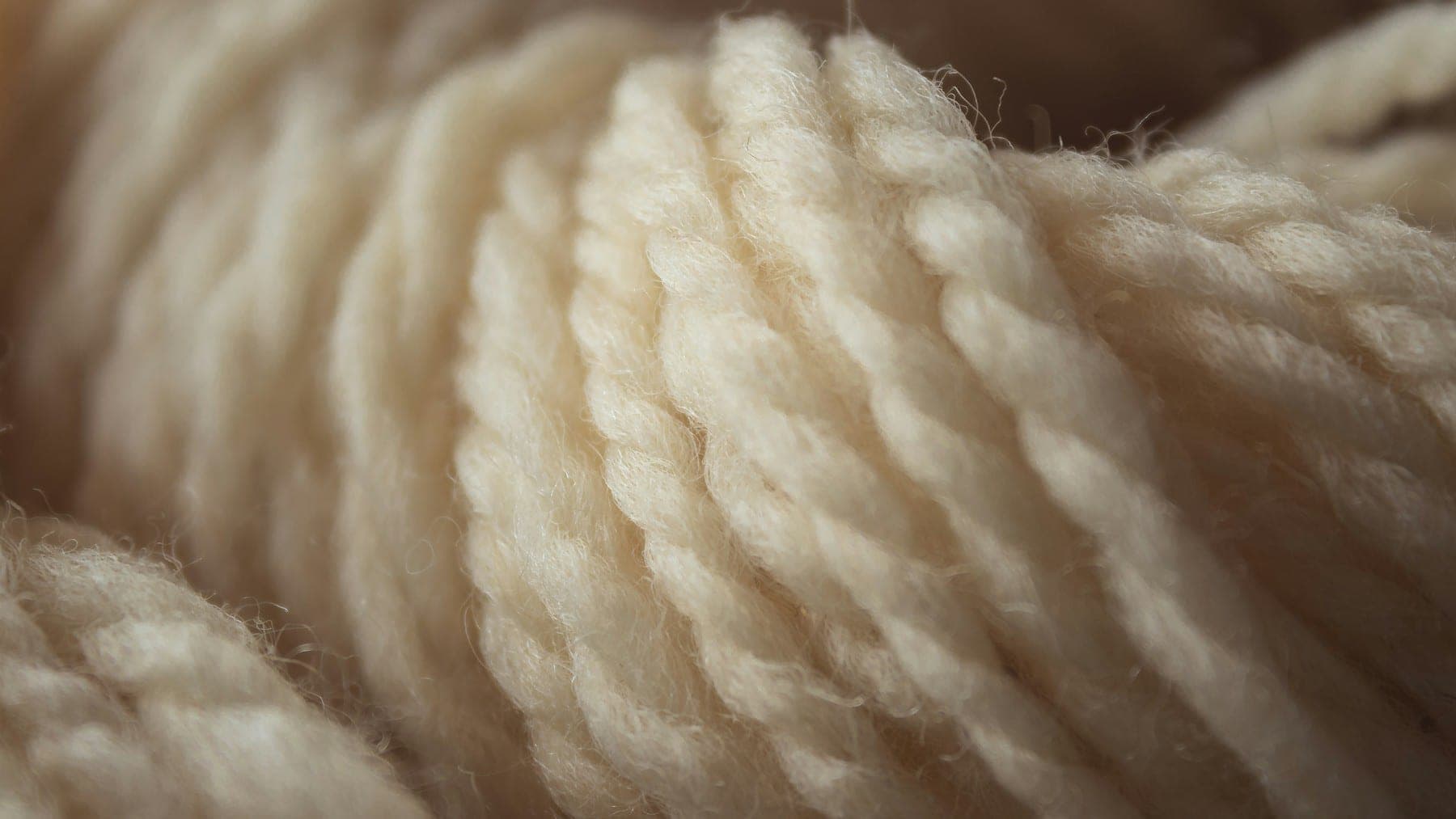
Step 2Spin
The wool is spun into yarn, by hand for the most characterful rugs and by machine for the most even. Hand-spun yarn varies in thickness, and the pile shows it.
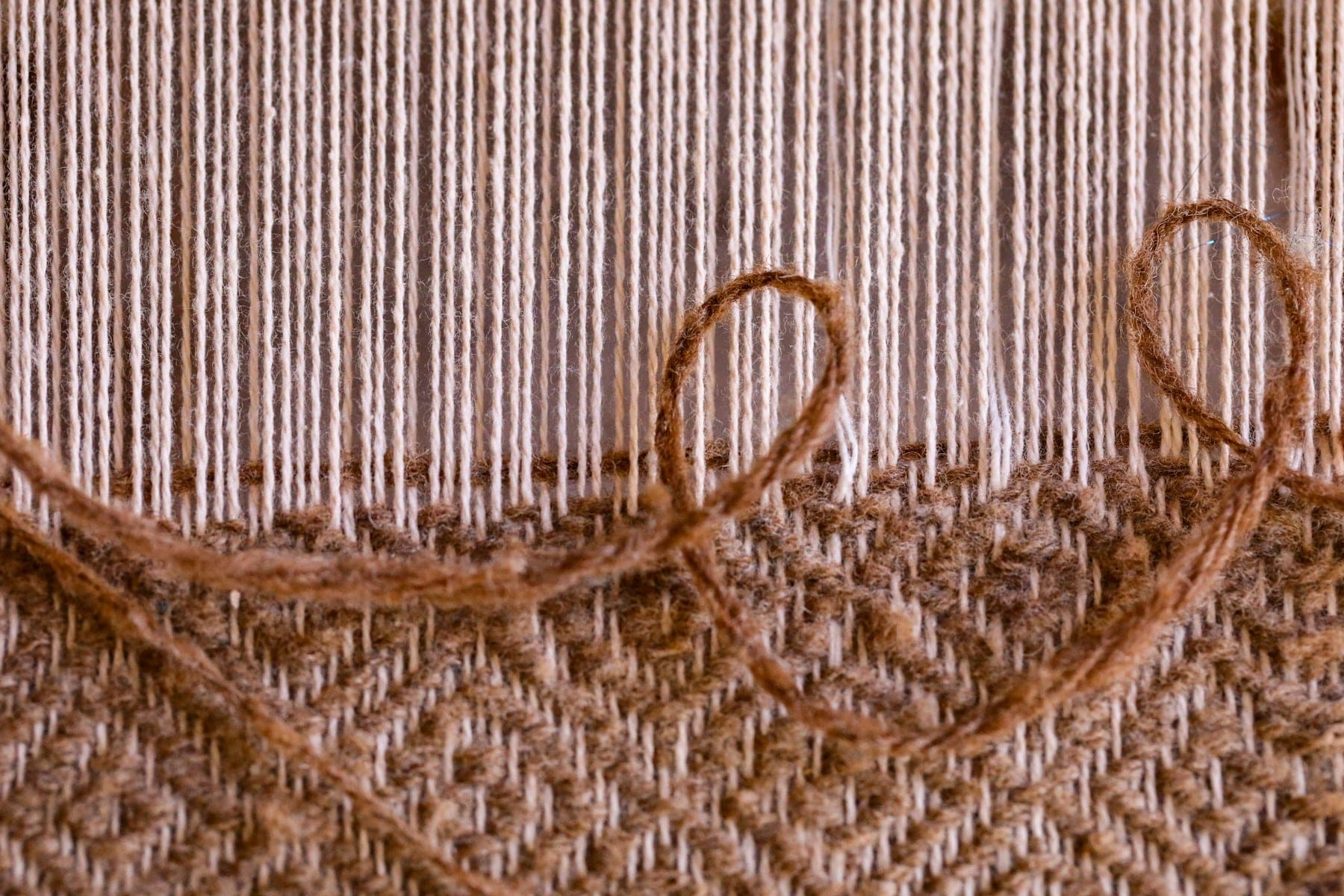
Step 3Warp
Cotton, wool or silk warp threads are strung tight from the top beam of the loom to the bottom. They become the rug's foundation and, at each end, its fringe.
The knotting alone takes months: a 5 × 8 ft rug at 160 knots per square inch holds 921,600 knots.
Step 4Knot
The weaver ties each knot around the warps, row by row from the bottom, passes the weft across and beats the row down. When the rug is finished, the pile is sheared level.
The warp
Eight warp threads, strung tight. Every knot will sit on two of them.
Row by row
Each knot wraps two warps and its ends stand up as pile. After every row the weaver passes the weft and beats it down.
The shear
When the last row is tied, the pile is clipped level. The design is now as sharp as the knot count allows.
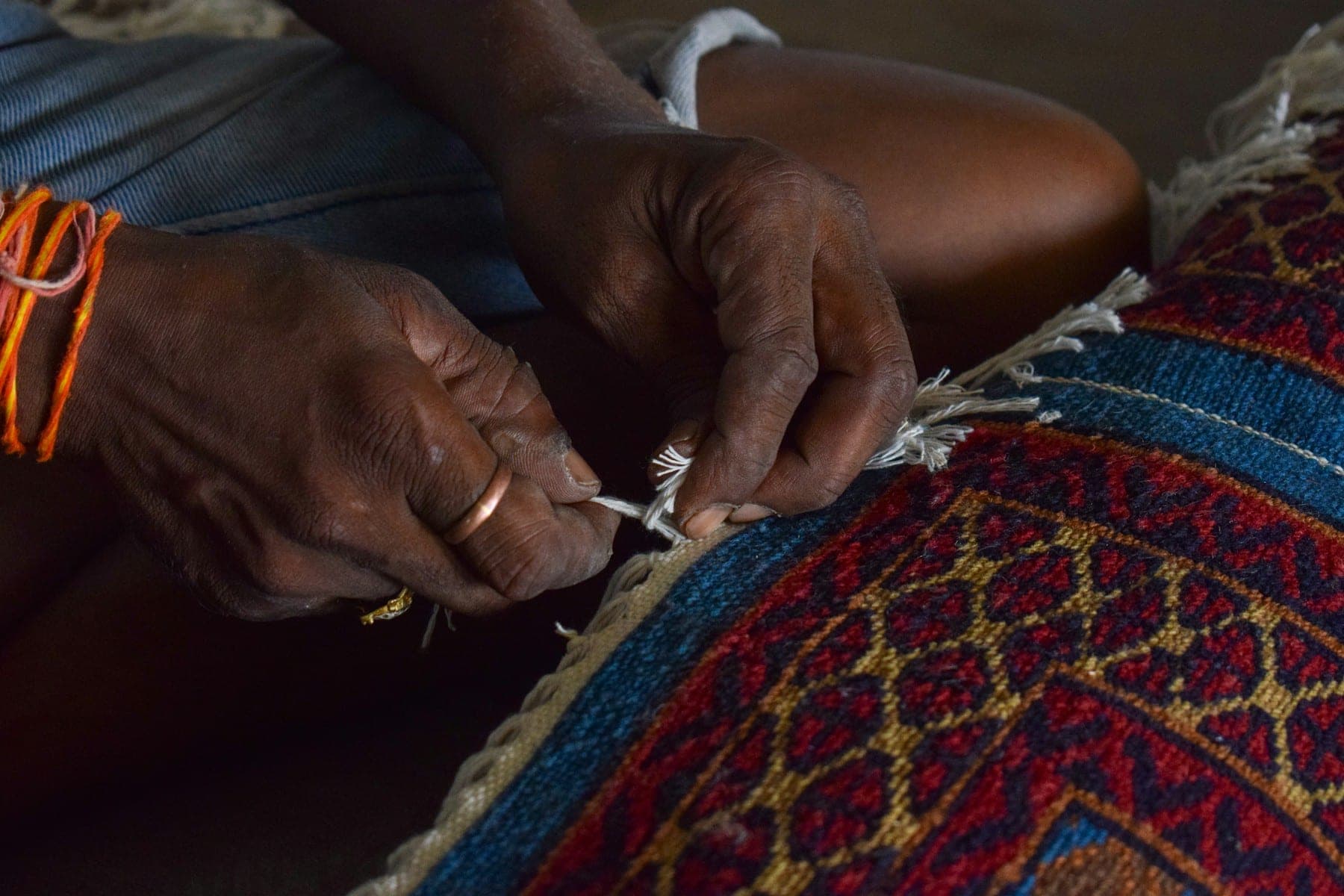
Step 5Finish
Off the loom, the rug is washed to set the colours and soften the wool, stretched and dried flat, sheared again, and its sides wrapped and its ends knotted by hand so nothing unravels.
Hand-tufted
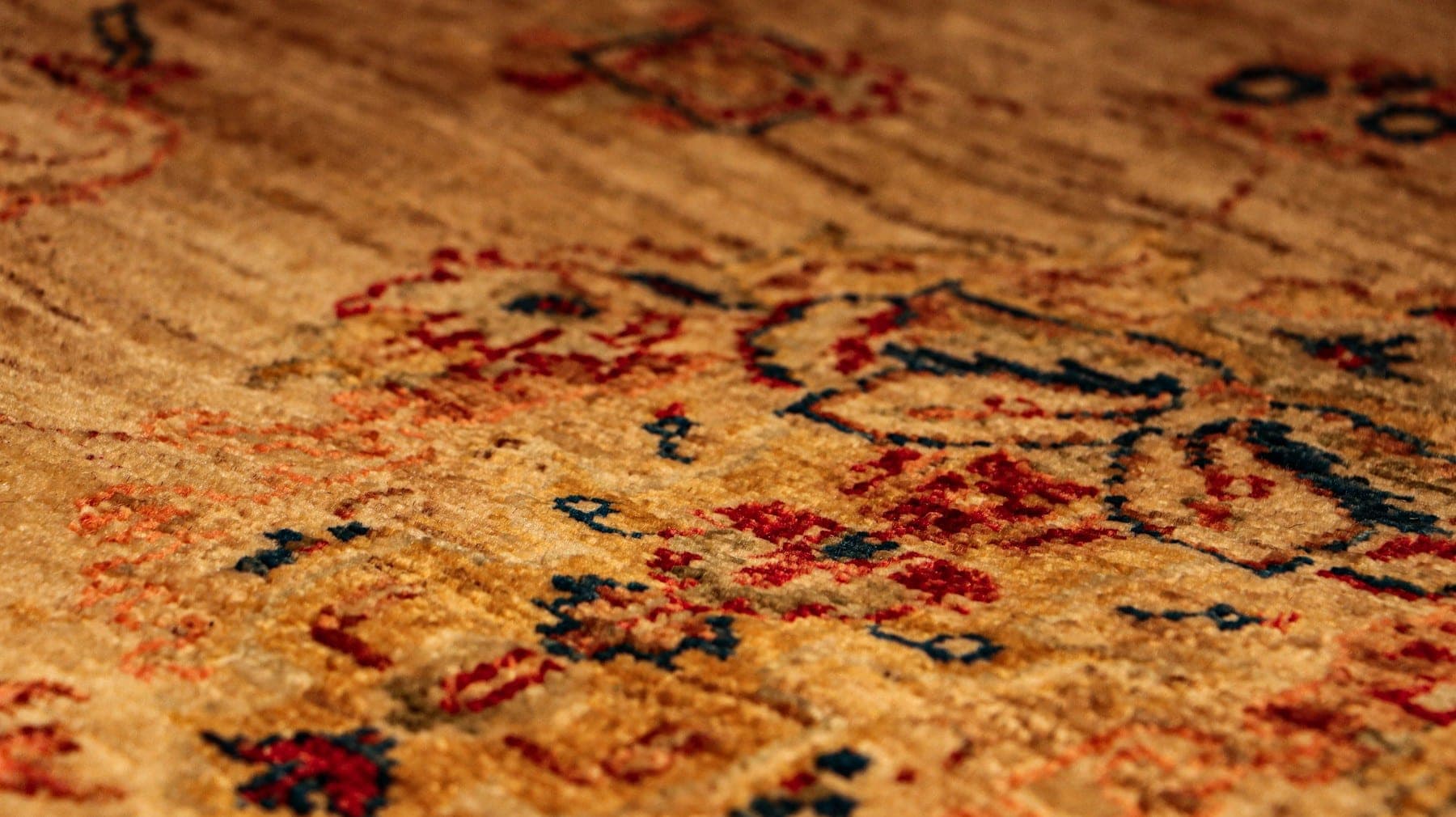
A hand-tufted rug is made on a frame, not a loom. The design is drawn on a cotton canvas and the maker follows it with a hand-held tufting gun, punching loops of yarn through the canvas. The loops are cut for a plush pile or left for a looped one, and the back is sealed with latex and covered with a second cloth.
It takes days rather than months, so a tufted rug costs a fraction of a knotted one, and it can do things a loom cannot: curved edges, pile at two heights, bold modern designs. The latex is what ages first, so expect ten to fifteen good years in a bedroom or a quiet living room.
Flatweaves: kilims and dhurries
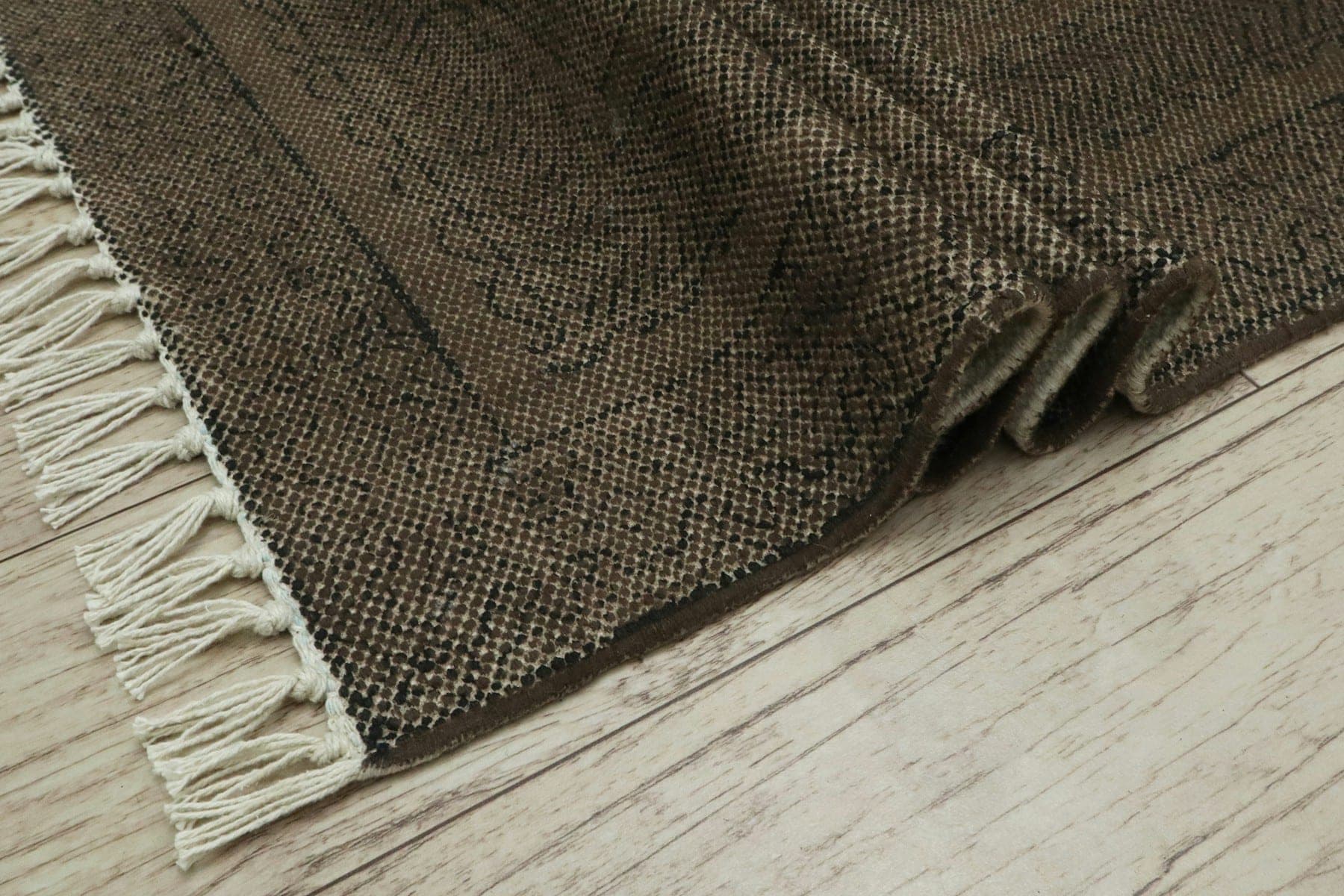
A flatweave has no pile and no knots. Coloured weft threads are woven in and out of the warp, and the weft itself makes the pattern. Kilims come from Anatolia, Iran, the Caucasus and Afghanistan; dhurries are India's flatweave, traditionally in cotton.
They are thin, light and often reversible, so they slide under doors, sit well under dining chairs and wear twice as long if you turn them over. They are also among the most affordable handmade rugs.
Handmade or machine-made: an honest comparison
Typical figures for a 5 × 8 ft rug. Prices are the range in our shop today, in your currency.
Machine-made rugs are woven on electric power looms, fast and identical, usually in polypropylene, polyester or viscose. They are the cheapest to buy and the easiest to clean, and the right choice for a rental, a playroom or a veranda. They do not last like wool, and they have little value when you pass them on.
| Compare | Hand-knotted | Hand-tufted | Flatweave | Machine-made |
|---|---|---|---|---|
| Time to make | 3 to 12 months, by knot count | 1 to 3 weeks | 2 to 6 weeks | A few hours |
| Knots | Every knot tied by hand, 50 to 500 per square inch | None: loops punched through canvas and glued | None: the weft makes the pattern | None tied by hand: pile woven in by the loom |
| Lifespan | 50 years and more | 10 to 15 years | 15 to 30 years, longer if turned | 5 to 15 years |
| How to tell | The design shows on the back, knot by knot | A plain cloth covers the back | The same on both sides | A perfectly regular grid on the back |
| Price in our shop5 × 8 ft, lowest to highest | ₹1,24,000 to ₹7,60,000 | ₹27,900 to ₹44,900 | ₹15,900 to ₹39,900 | ₹8,900 to ₹17,900 |
Hand-knotted
- Time to make
- 3 to 12 months, by knot count
- Knots
- Every knot tied by hand, 50 to 500 per square inch
- Lifespan
- 50 years and more
- How to tell
- The design shows on the back, knot by knot
- Price in our shop
- ₹1,24,000 to ₹7,60,000
Hand-tufted
- Time to make
- 1 to 3 weeks
- Knots
- None: loops punched through canvas and glued
- Lifespan
- 10 to 15 years
- How to tell
- A plain cloth covers the back
- Price in our shop
- ₹27,900 to ₹44,900
Flatweave
- Time to make
- 2 to 6 weeks
- Knots
- None: the weft makes the pattern
- Lifespan
- 15 to 30 years, longer if turned
- How to tell
- The same on both sides
- Price in our shop
- ₹15,900 to ₹39,900
Machine-made
- Time to make
- A few hours
- Knots
- None tied by hand: pile woven in by the loom
- Lifespan
- 5 to 15 years
- How to tell
- A perfectly regular grid on the back
- Price in our shop
- ₹8,900 to ₹17,900
Materials
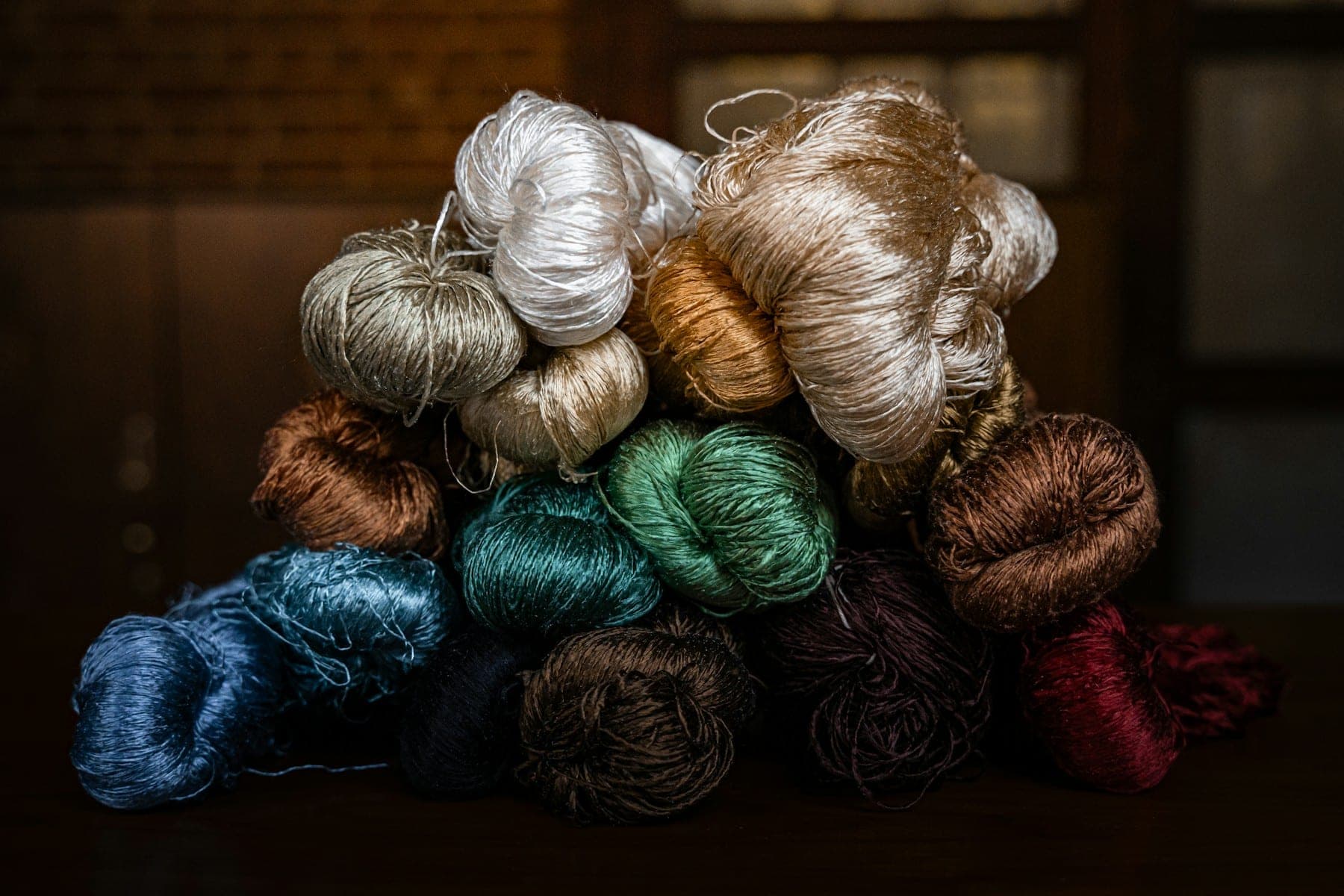
What the pile is made of decides how a rug feels, wears and ages.
- Wool
- Springy, warm and naturally resistant to dirt thanks to its lanolin. The best all-round pile for rugs that are walked on.
- Silk
- Fine, strong for its weight and lustrous, with a sheen that shifts as you walk round it. It takes the finest knot counts, and it prefers quiet rooms.
- Bamboo silk and viscose
- Fibres made from wood or bamboo pulp, with a silk-like shine at a fraction of the price. Softer and weaker than silk, and they mark with water.
- Cotton
- The usual warp and weft of hand-knotted rugs, and the pile of flat-woven dhurries. Cool underfoot and easy to wash.
- Jute
- A coarse plant fibre with a natural straw colour, woven into flatweaves and braided rugs. Hard-wearing and textured, best kept dry.
Reading KPSI
Knots per square inch is the clearest single number for how fine a hand-knotted rug is. Each square below is one square inch, one dot per knot.
60
knots per square inch
Fine, 93,000 knots per m²
Heriz, Kazak and village rugs: bold geometry that wears for generations.
160
knots per square inch
Very fine, 2,48,000 knots per m²
Tabriz and Kashan city rugs: medallions and curving floral borders.
400
knots per square inch
Heirloom, 6,20,000 knots per m²
Kashmiri and Qom silk: petals with veins, birds with feathers.
Count it yourself
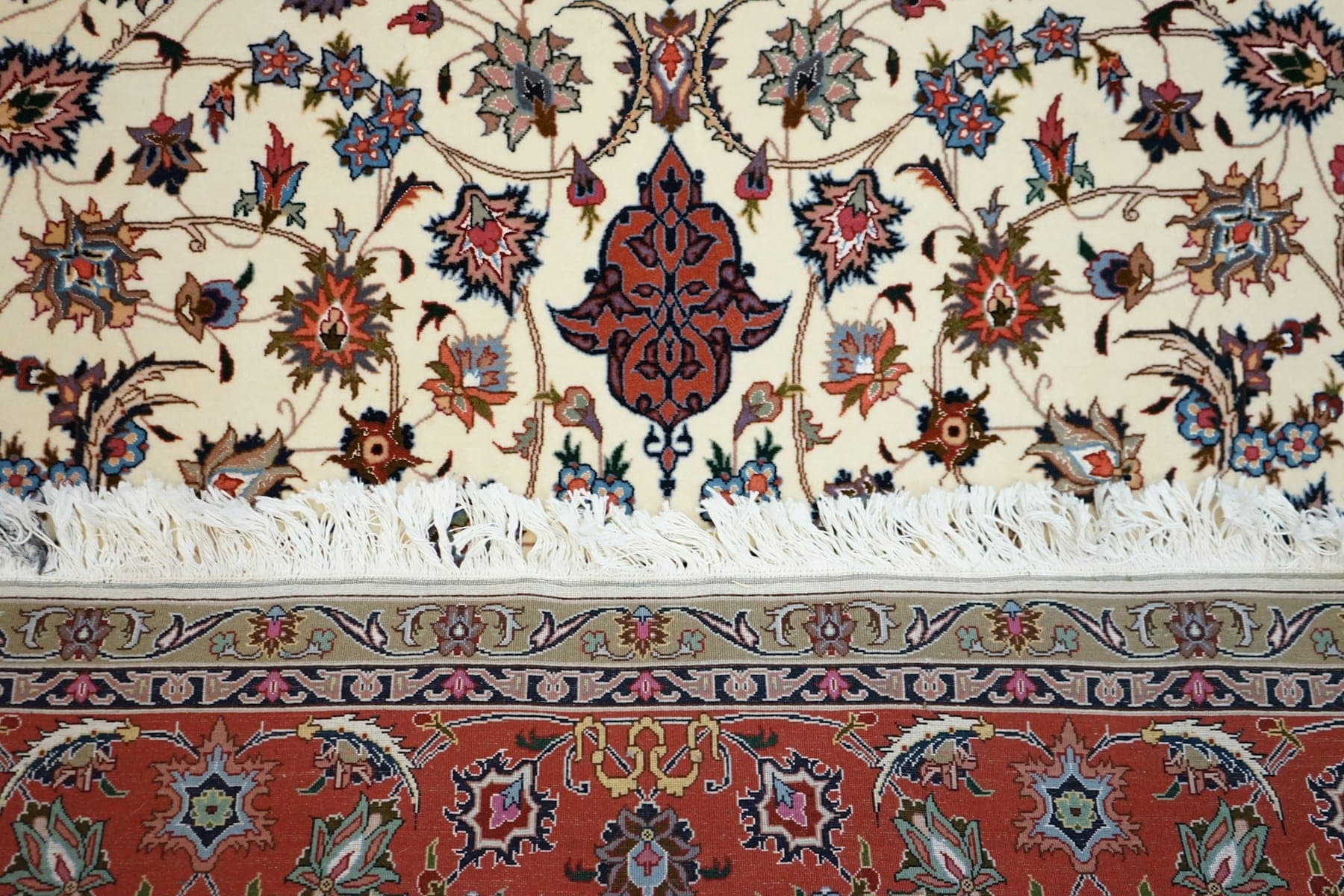
- Turn the rug over and lay a ruler across one inch of a row.
- Count the knots. Each shows as two small bumps side by side, so count pairs.
- Count the rows in one inch along the length, and multiply the two numbers.
Care
A well-made rug needs a few minutes a week.
- Vacuum weekly with suction only, going with the pile, and keep the nozzle off the fringe.
- Turn the rug round every six to twelve months so it wears and fades evenly.
- Blot spills at once with a clean white cloth; never rub, never bleach.
- Keep it out of strong afternoon sun and off damp floors.
- Have a hand-knotted rug washed by a specialist every three to five years, never steam-cleaned.
See the knots for yourself
Every hand-knotted rug in the shop shows its knot count, drawn at the density it was woven.