Guides, 8 min read
The rug size guide: the right size for every room
Most rugs are bought too small. How to size a rug for a living room, a bedroom, a dining table and a hall, with the measurements that matter.
By The Persian Knots team,
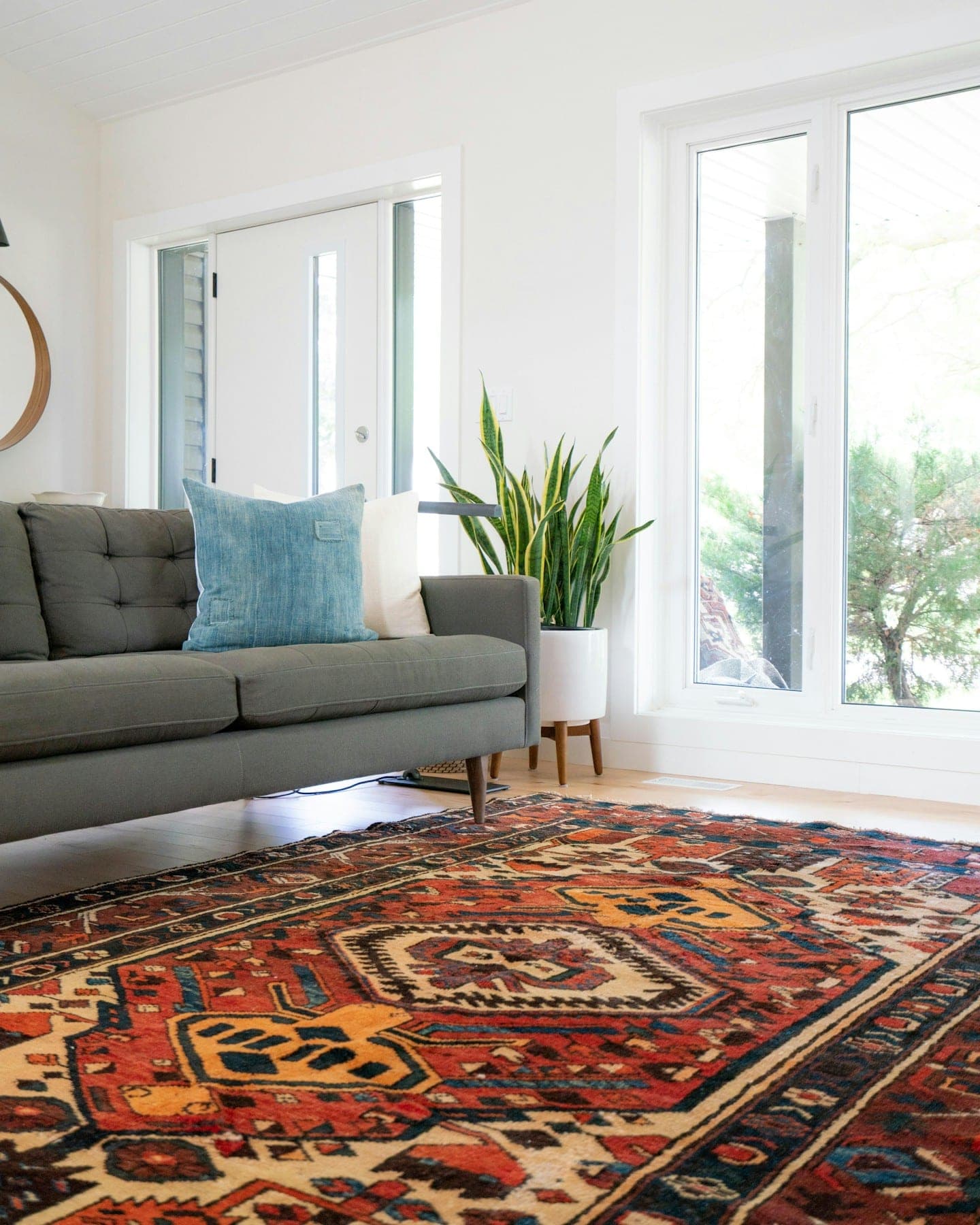
Most rugs are bought too small. A rug that floats in the middle of a room, with no furniture touching it, makes the room look smaller and the rug look like a mat. The simplest rule is that the front legs of every seat in a group should sit on the rug. In a living room with a three-seat sofa that usually means 5 × 8 ft at the least, and 8 × 10 ft when armchairs join it.
This guide gives the measurements that matter for each room, in feet and centimetres, and the few rules that hold everywhere.
Start with the floor, not the rug
Measure the room wall to wall, then mark the rug out on the floor with masking tape or sheets of newspaper and live with it for a day. Walk around it, pull the chairs out, open the doors. Tape is free; sending back a 9 × 12 ft rug is not.
Three distances do most of the work:
- Walls. Leave 30 to 45 cm (12 to 18 in) of bare floor between the rug and the walls. In a small room 20 cm is enough; in a large one up to 60 cm stops the rug looking like fitted carpet.
- Doors. Check the gap under any door that swings over the rug. A hand-knotted pile of 10 to 15 mm can catch a low door; a flatweave will not.
- Walkways. Keep about 60 cm clear between the edge of the rug and anything you walk past, so nobody catches a toe on the border.
Living room
Decide how the furniture will sit on the rug, then pick the size.
- All legs on. The sofa and every chair stand fully on the rug. It needs the biggest rug, usually 8 × 10 ft or 9 × 12 ft, and suits open-plan rooms because the rug marks out the seating area as a room of its own.
- Front legs on. The front feet of the sofa and chairs sit on the rug and the back feet stay on the floor. This is the most forgiving layout and the one we suggest for most homes: 5 × 8 ft for a three-seat sofa on its own, 6 × 9 ft or 8 × 10 ft with two armchairs.
- Coffee table only. A smaller rug under the table with no furniture on it. It works in a tight room or with a sofa against the wall, but go no smaller than 4 × 6 ft or the rug looks lost.
One check catches most mistakes: the rug should be at least as wide as the sofa, and ideally 15 to 20 cm wider on each side.
Bedroom
You step out of bed onto whatever is beside it, so the rug should show on both sides. Turn it so its long side runs across the bed, and slide it under the lower two-thirds of the bed, stopping short of the bedside tables so they stay level on the floor.
| Bed | Rug, long side across the bed | Rug showing each side |
|---|---|---|
| Single, 90 cm | 4 × 6 ft (122 × 183 cm) | about 45 cm |
| Double, 140 cm | 5 × 8 ft (152 × 244 cm) | about 50 cm |
| Queen, 152 cm | 8 × 10 ft (244 × 305 cm) | about 75 cm |
| King, 183 cm | 9 × 12 ft (274 × 366 cm) | about 90 cm |
If a large rug is out of budget, two runners, one on each side of the bed, do the same job. A 3 × 5 ft rug at the foot of the bed works when the bed stands against a wall on one side.
Dining room
Chairs must stay on the rug when they are pulled out, or their back legs catch on the edge at every meal. Measure the table and add 60 to 75 cm on every side.
| Table | Seats | Rug |
|---|---|---|
| Round, 120 cm across | 4 | 8 ft round (244 cm) |
| 150 × 90 cm | 4 to 6 | 8 × 10 ft (244 × 305 cm) |
| 180 to 200 × 100 cm | 6 to 8 | 9 × 12 ft (274 × 366 cm) |
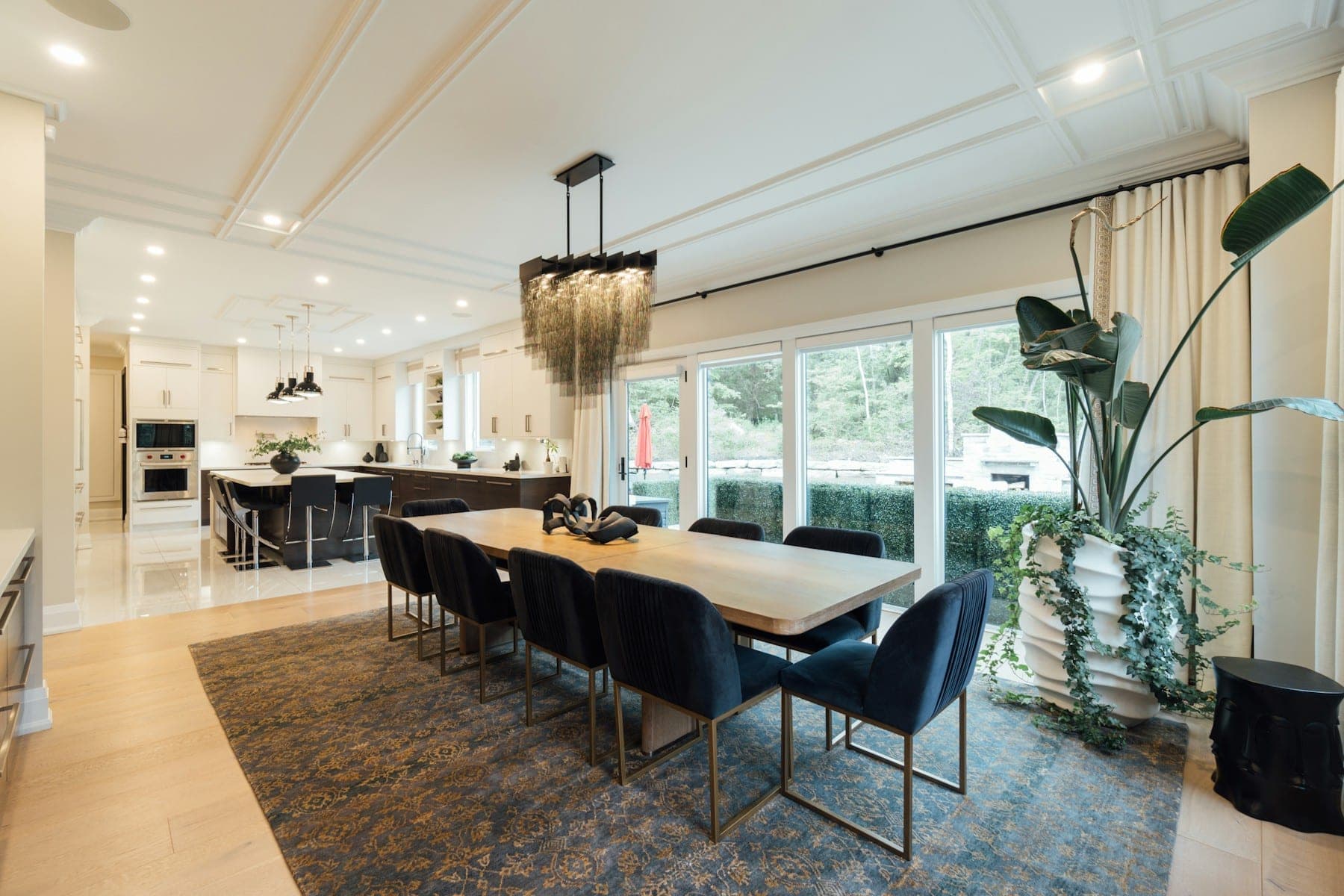
Let the rug follow the table: round under round, rectangle under rectangle. A low pile or a flatweave is easier under chairs than a deep pile, and far easier to clean after a dinner party.
Hallways and stairs
Runners are sold by length, and the width is nearly always 2½ ft (76 cm). Leave 15 to 30 cm of floor at each end and at least 10 cm along each side. For a corridor 90 cm wide, a 2½ ft runner leaves a neat margin; for one wider than 120 cm, look at a 3 ft or 4 ft wide rug instead.
If the hall is longer than the longest runner, two runners with a gap of 15 to 20 cm look intentional. Butted end to end, they look like a mistake.
At the front door, choose a 3 × 5 ft or 4 × 6 ft rug that clears the swing of the door, and put a rug pad under it so it stays put.
Round rugs
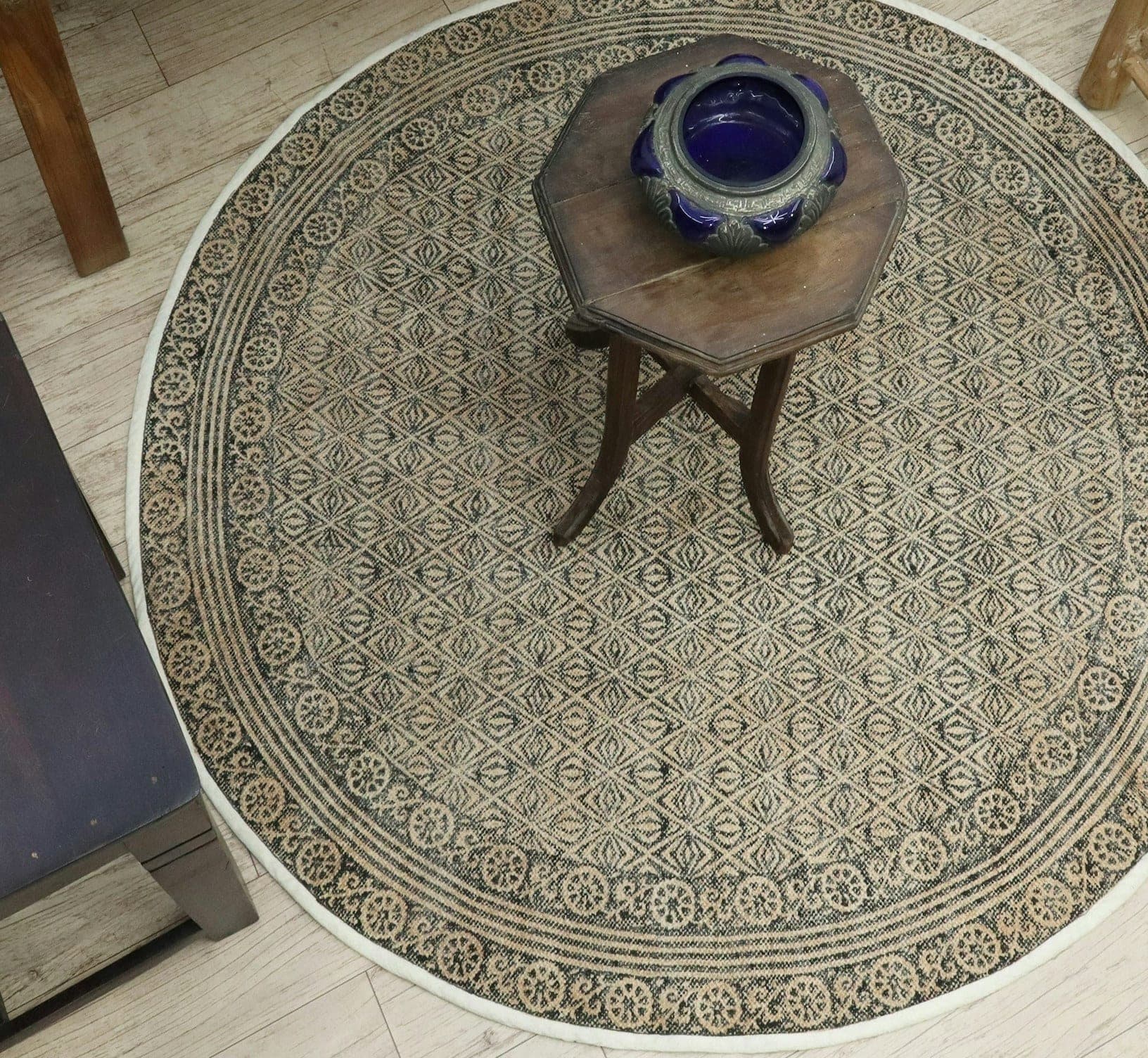
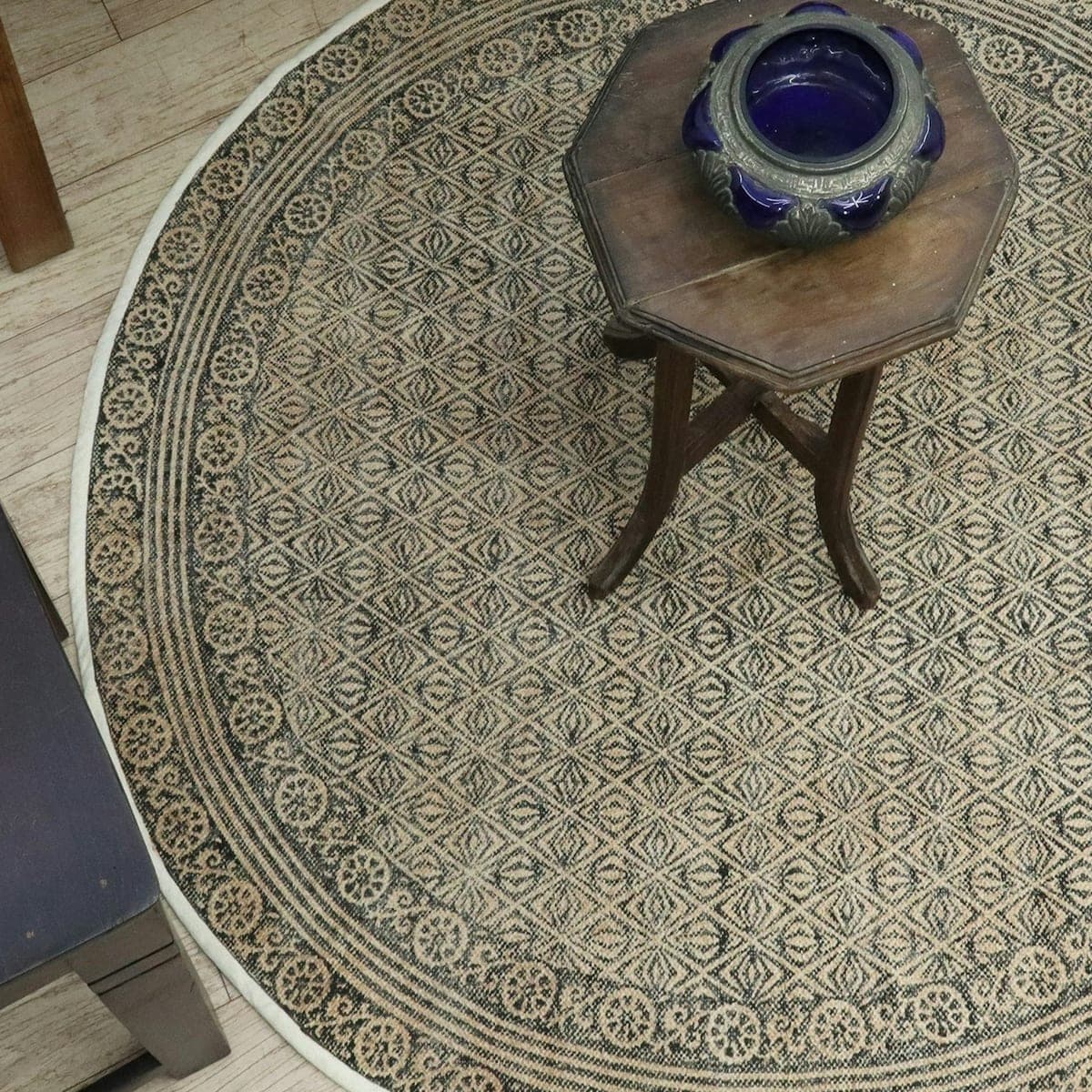
A round rug softens a square room, sits well under a round table and fills a reading corner with a single chair. Size it the same way as any other rug: whatever stands on it should sit fully on it, with at least 30 cm of floor showing around the edge. An 8 ft round takes a table for four; a 6 ft round suits a centre table in an entrance hall.
When you are between two sizes
In living and dining rooms, choose the larger one. A rug that is slightly too big reads as generous; one that is too small reads as an afterthought. In hallways and bedrooms with little floor between the furniture, choose the smaller one, so the floor still frames the rug.
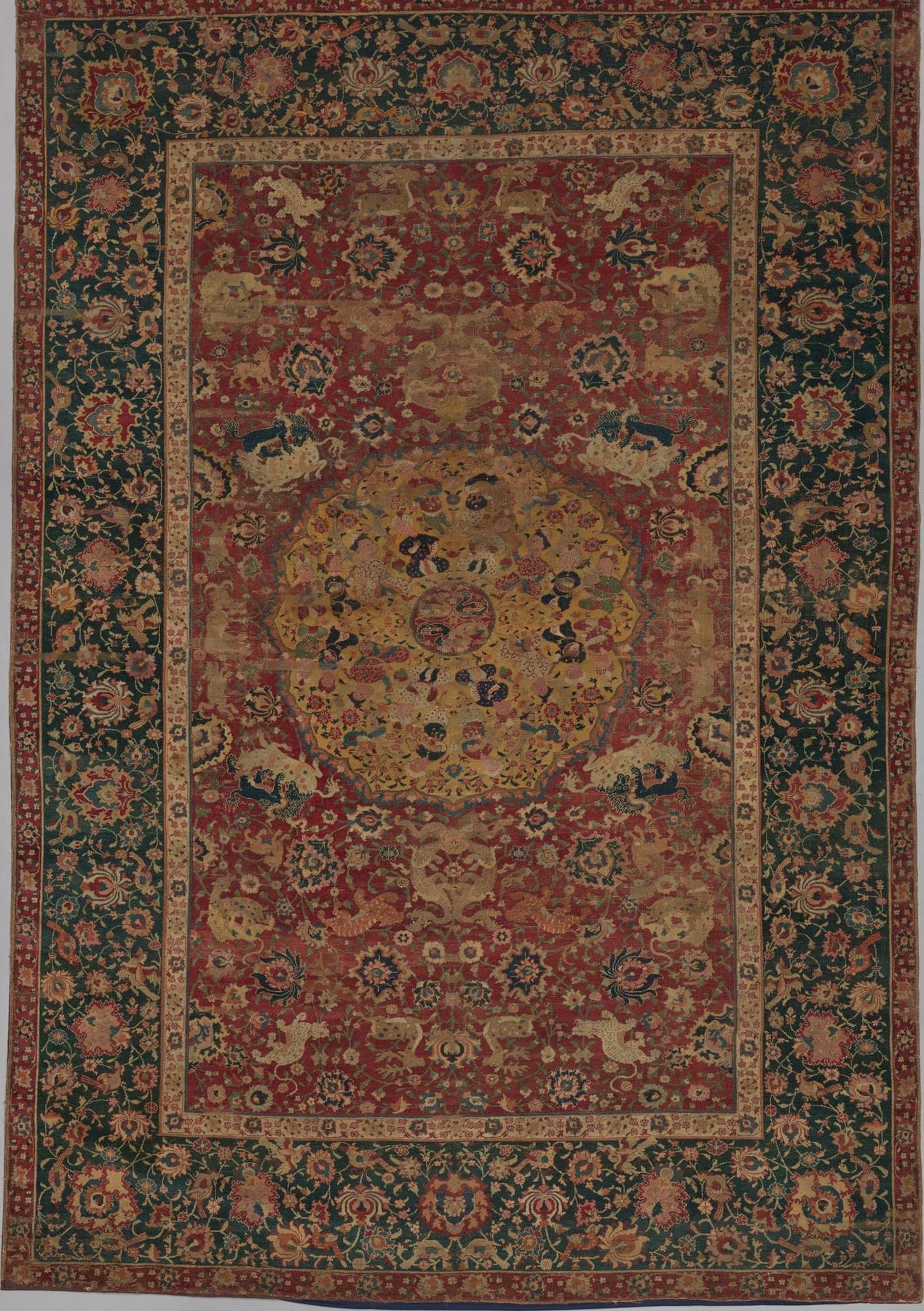
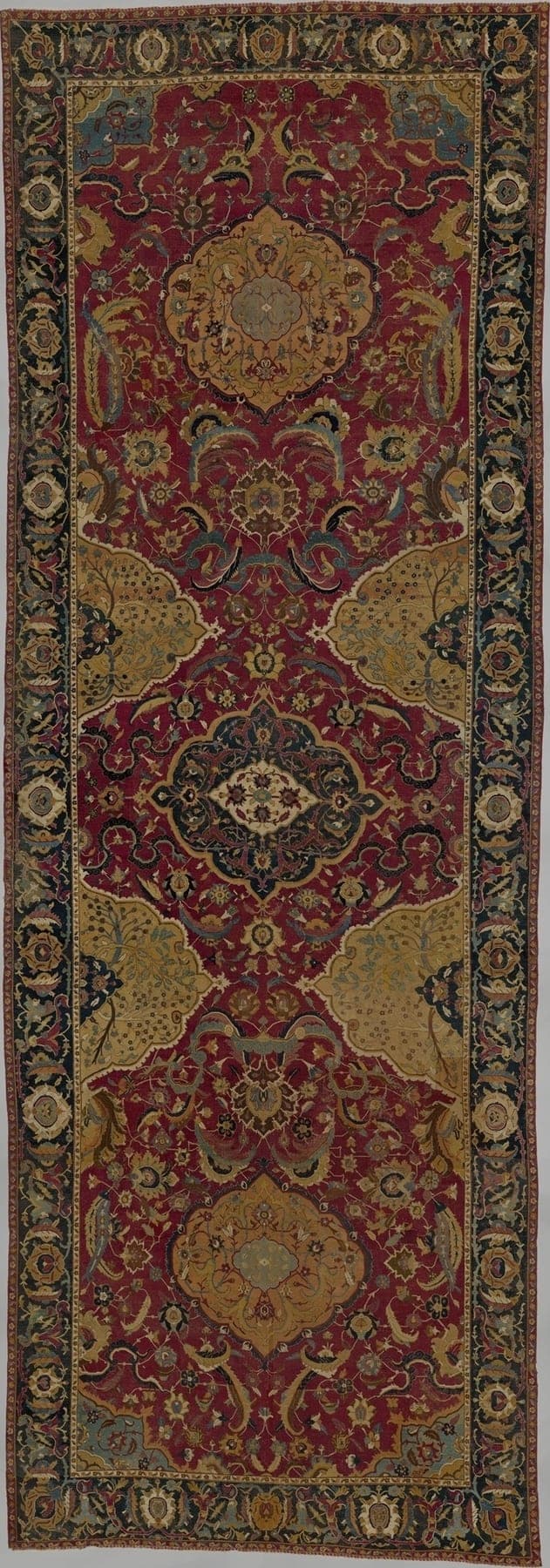
The exception is a fine silk rug or a piece with a strong central medallion. These look best with the whole design in view, so keep furniture off them and treat the rug like a painting on the floor.
Quick reference
- Three-seat sofa, front legs on: 5 × 8 ft.
- Sofa and two armchairs: 8 × 10 ft.
- Queen bed: 8 × 10 ft, long side across the bed.
- Dining for six: 8 × 10 ft for a table up to 150 × 90 cm, 9 × 12 ft beyond that.
- Hallway: a 2½ ft runner about 30 cm shorter than the hall.
Every rug page on this site has a scale drawing of the size you choose in front of a three-seat sofa. Switch between feet, metres and centimetres next to the sizes, and pick a size to see the drawing change. If your room is unusual, send us the measurements and a photo, and we will suggest a size.
Share this guide