Care, 6 min read
How to care for wool and silk rugs
Vacuuming, turning, spills and sun: the simple habits that keep a knotted rug looking right for decades, and when to call a specialist.
By The Persian Knots team,
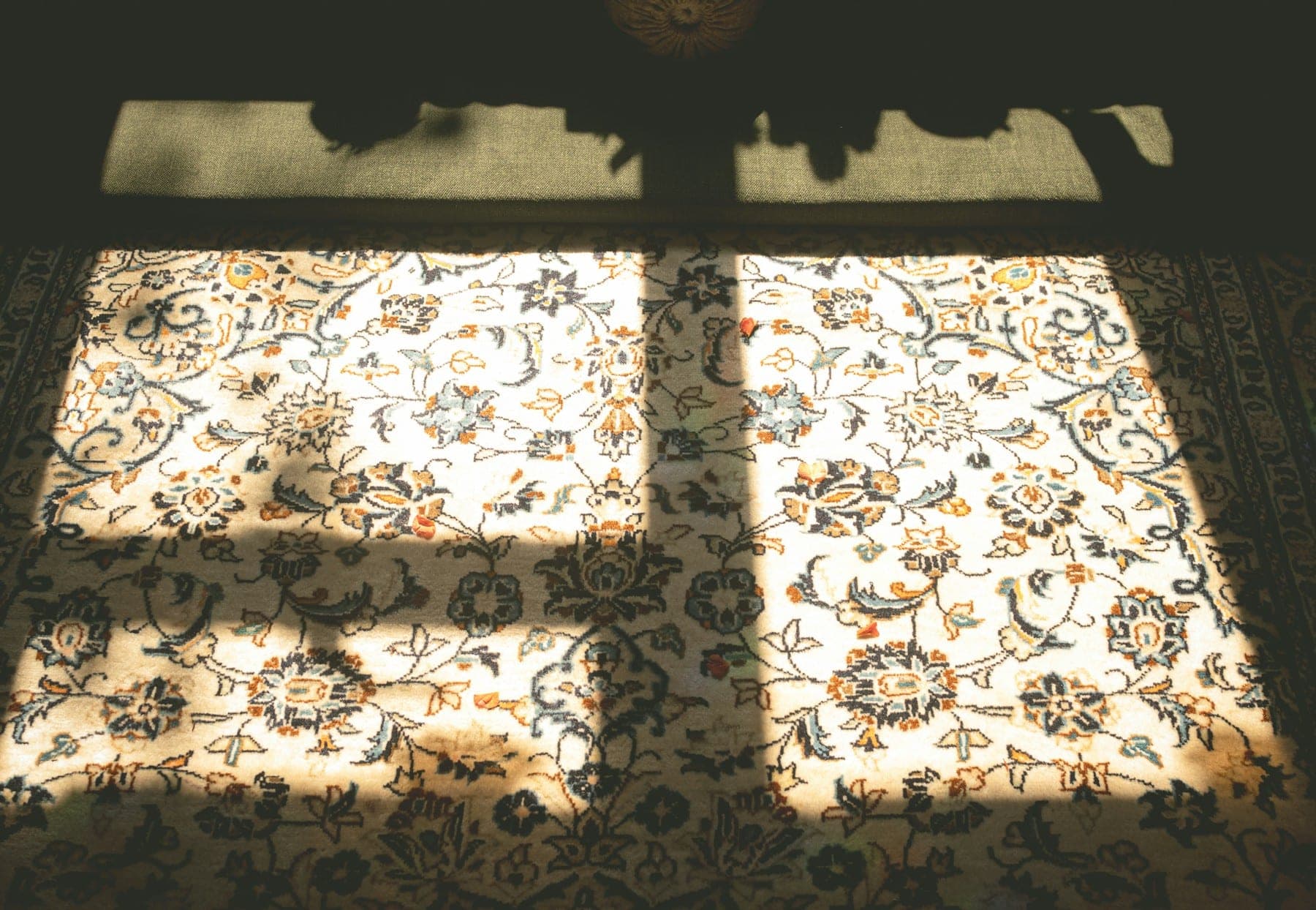
A hand-knotted wool rug is one of the toughest things in a house. It was made to be walked on for generations, and most of the care it needs takes a few minutes a week. Silk is more delicate and asks for a little more thought. Here are the habits that keep both looking right for decades, and the signs that it is time to call a specialist.
The first few weeks
New wool rugs shed. Short fibres left over from spinning and clipping work their way to the surface, and they come up in the vacuum cleaner for the first weeks or months. It is normal, it does not mean the rug is wearing out, and it stops. Hand-tufted rugs shed more and for longer than hand-knotted ones.
Put a rug pad down from day one. It stops the rug sliding, takes some of the wear off the pile, lets air move underneath and makes the rug feel thicker underfoot. Choose felt or natural rubber. Some cheap plastic underlays react with floor finishes and leave marks on wood.
Every week: vacuum the right way
Vacuum once a week, and twice where people walk most. Grit is what wears a rug out: it works down into the pile and cuts the fibres every time someone steps on them.
- Use suction only. Switch off the rotating brush, or use the hand attachment. A beater bar tears at hand-knotted pile and at the fringe.
- Go with the pile. Run your hand along the rug. One direction feels smooth; that is the way the pile lies. Vacuum in that direction.
- Leave the fringe alone. A vacuum cleaner chews fringes. Sweep them straight with your hand, or use a soft brush.
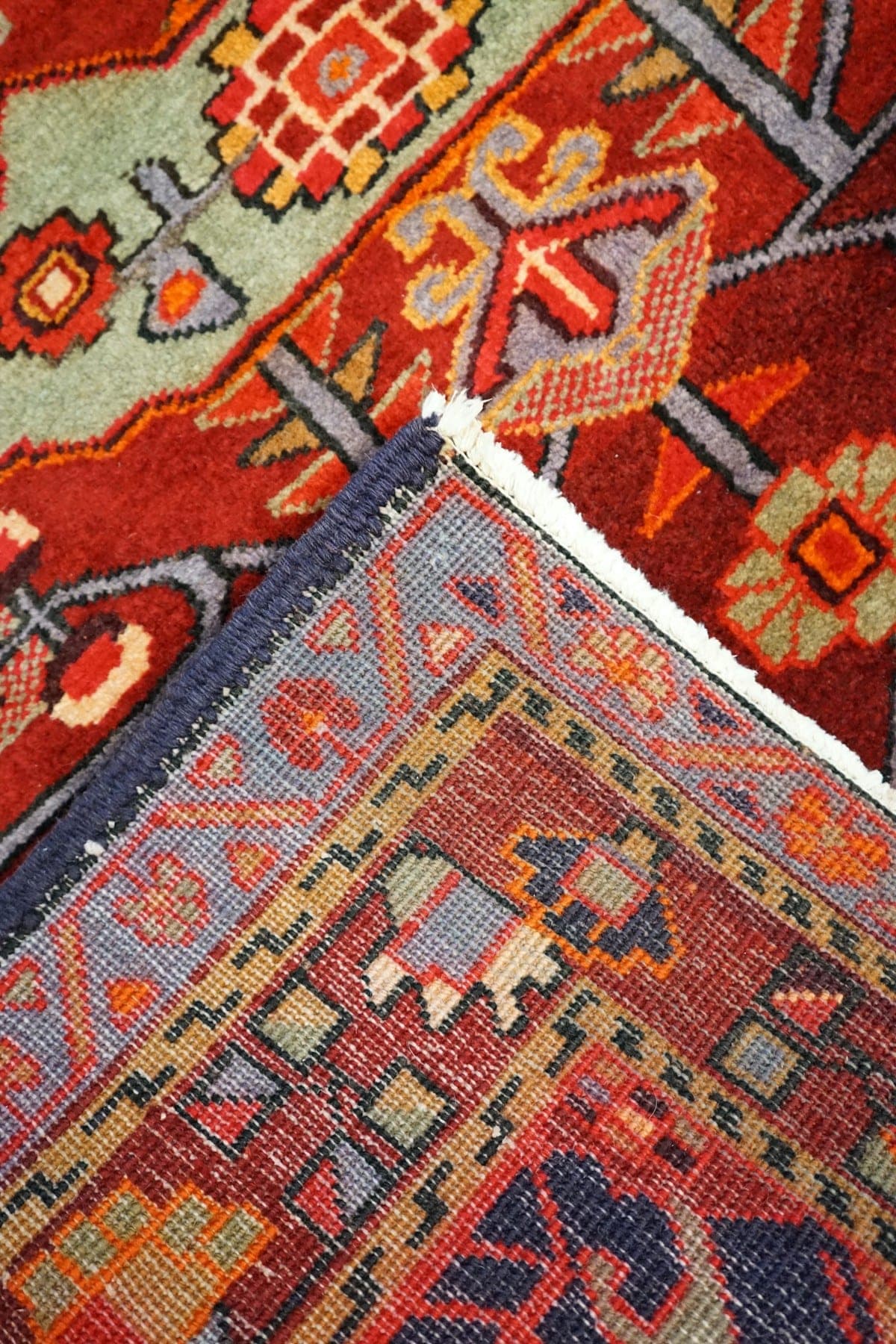
- Do the back. A few times a year, turn the rug over and vacuum the back. The vibration shakes out the grit that has settled at the roots of the knots.
Every six months: turn it round
Rotate the rug by 180 degrees every six to twelve months. People walk the same paths and sun comes in from the same window, so one end wears and fades faster than the other. Turning it spreads both evenly.
Sun and damp
Direct sun fades every dye in time, natural or synthetic. Deep reds and blues go first. Draw a blind or a sheer curtain during the brightest hours, and turning the rug does the rest.
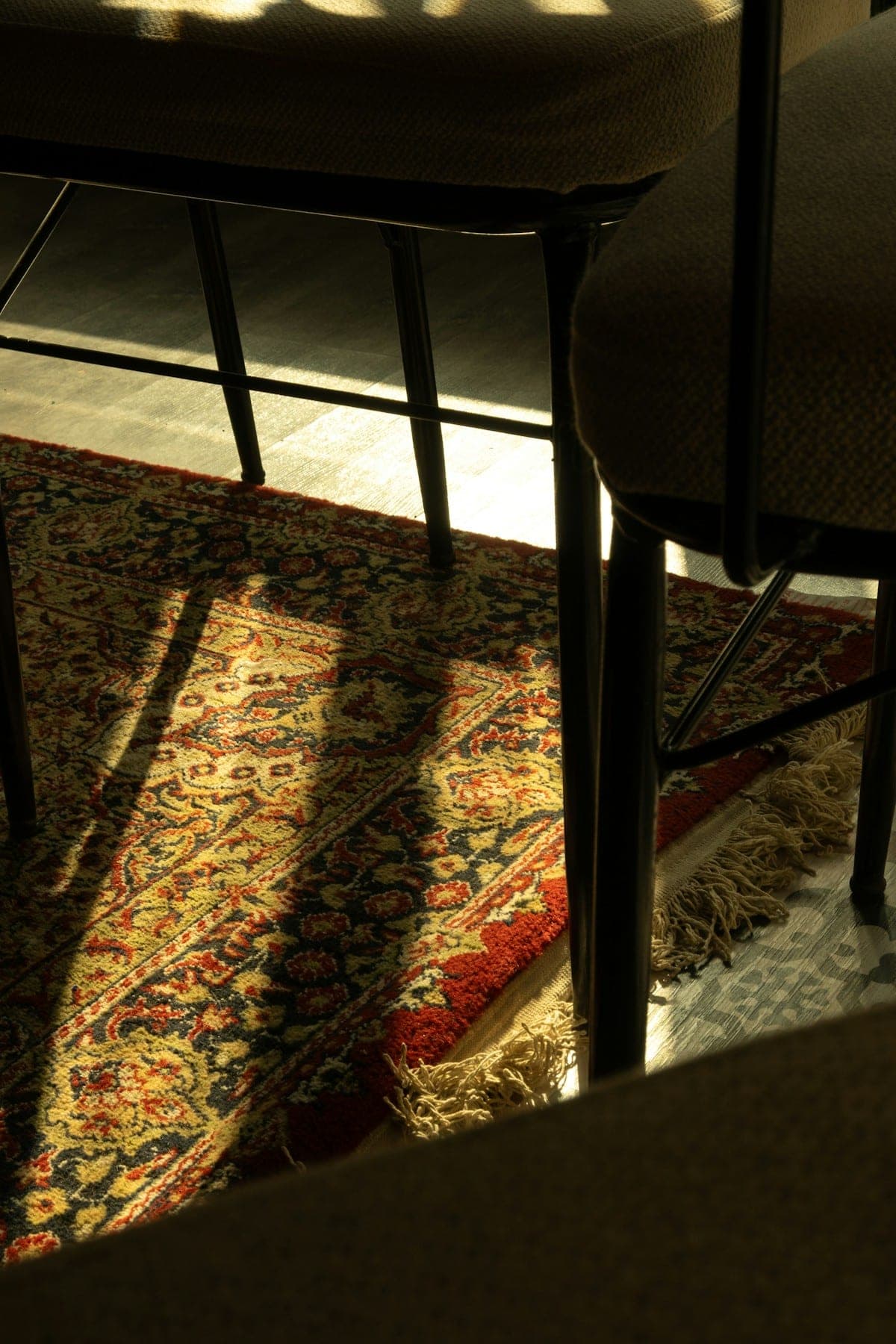
Damp is worse than sun. Never lay a rug on a floor that is still drying after mopping, keep plant pots off it, and watch the corners of rooms that stay damp in the monsoon. A wet cotton foundation can rot from inside long before you see a mark on the front.
Spills
Act quickly, and resist the urge to scrub.
- Scoop up anything solid with a spoon or a blunt knife, working from the edge of the spill towards the middle.
- Blot with a clean white cloth or paper towel. Press, lift, move to a dry part of the cloth, press again. Rubbing pushes the stain deeper and roughens the pile.
- For what is left, mix a few drops of a mild wool detergent into lukewarm water. Test it on a corner first, then dab it on and blot again.
- Rinse by dabbing with clean water, blot until nearly dry, and let the rug dry flat with air moving over it. A fan helps. A hair dryer or a heater does not.
Never use bleach, ammonia or oxygen stain removers on wool or silk. Be careful with enzyme cleaners sold for pet stains: some contain enzymes that break down protein, and wool and silk are protein fibres. For pet accidents that have soaked through, blot and rinse, then have the rug professionally washed.
Silk needs a lighter hand
Silk is strong for its weight but it does not spring back like wool, it marks with water, and some silk dyes run. Keep silk rugs where few people walk, and ask for shoes off. For a spill on silk, blot with a dry cloth and stop there; water can leave a ring. Call a specialist for anything more.
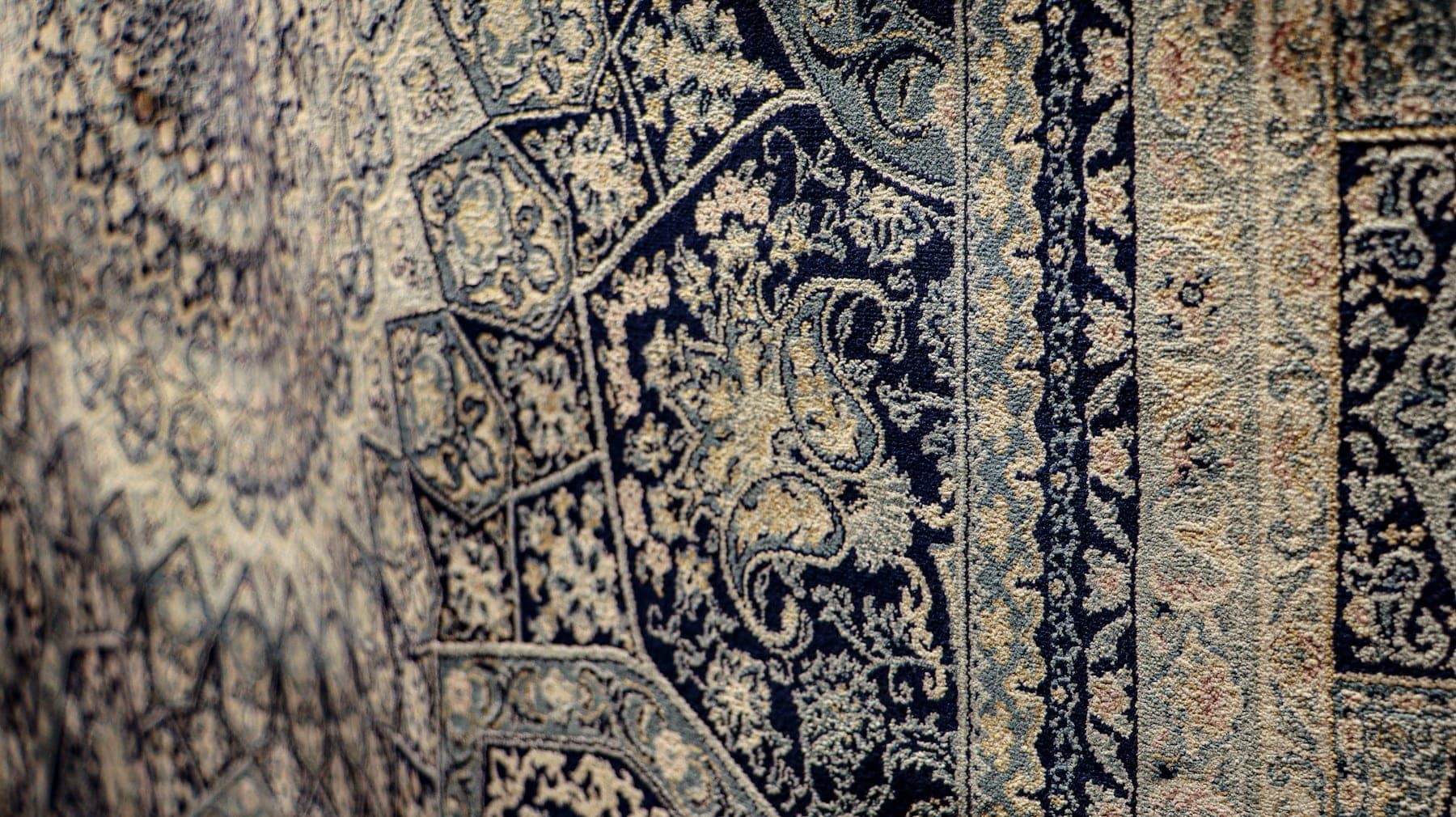
Silk also changes colour as you walk round it. Looking along the pile it appears lighter and shinier; looking against it, deeper and richer. That is the pile, not a fault, and it is part of why silk rugs look alive.
Moths
Carpet moths do not eat the rug; their larvae do, and they choose wool in dark, undisturbed places: under a sofa, behind a door, beneath a bed. Regular vacuuming, including under the furniture, is the best defence. Once or twice a year, turn back the corners and check the back of the rug for bare patches, fine webbing or tiny cocoons. If you find any, vacuum thoroughly, take the rug out into the sun for an afternoon, and call a specialist if the damage has spread.
Small repairs you can do
- A sprout. A single tuft standing proud of the pile is a knot end, not a loose thread. Snip it level with sharp scissors. Never pull it.
- A dent. Furniture legs leave dents. Put an ice cube in the dent, let it melt, then brush the pile up with your fingers once it is dry.
- A curling corner. Roll the corner gently the other way and weigh it down flat for a day or two. A rug pad stops it coming back.
Washing and storing
Have a hand-knotted rug washed by a rug specialist every three to five years in a living room, less often in a bedroom. It is a full-immersion wash and a slow dry, not a steam clean; hot steam can shrink wool and make dyes run. The specialist can also re-bind worn edges and secure a fringe before it unravels.
To store a rug, have it cleaned first, then roll it (never fold it) and wrap it in cotton sheeting or breathable paper rather than plastic, which traps moisture. Keep it off the floor in a dry room, and unroll it once a season to check for moths.
When to call a specialist
- Edges or fringes starting to unravel.
- A hole, a worn patch or moth damage.
- A stain that has soaked through to the back, or colour that has run.
- A silk rug that needs anything more than a dry blot.
Early repairs are small repairs. A frayed edge re-wrapped this month costs a fraction of rebuilding a border next year. Every rug on this site has its own care notes on the rug page, and you can write to us with a photo if something looks wrong.
Share this guide