Craft, 6 min read
Knots explained: what KPSI tells you about quality
From 50 knots per square inch in a village rug to 500 in a silk Qom: what the number means, how to count it and why finer is not always better.
By The Persian Knots team,
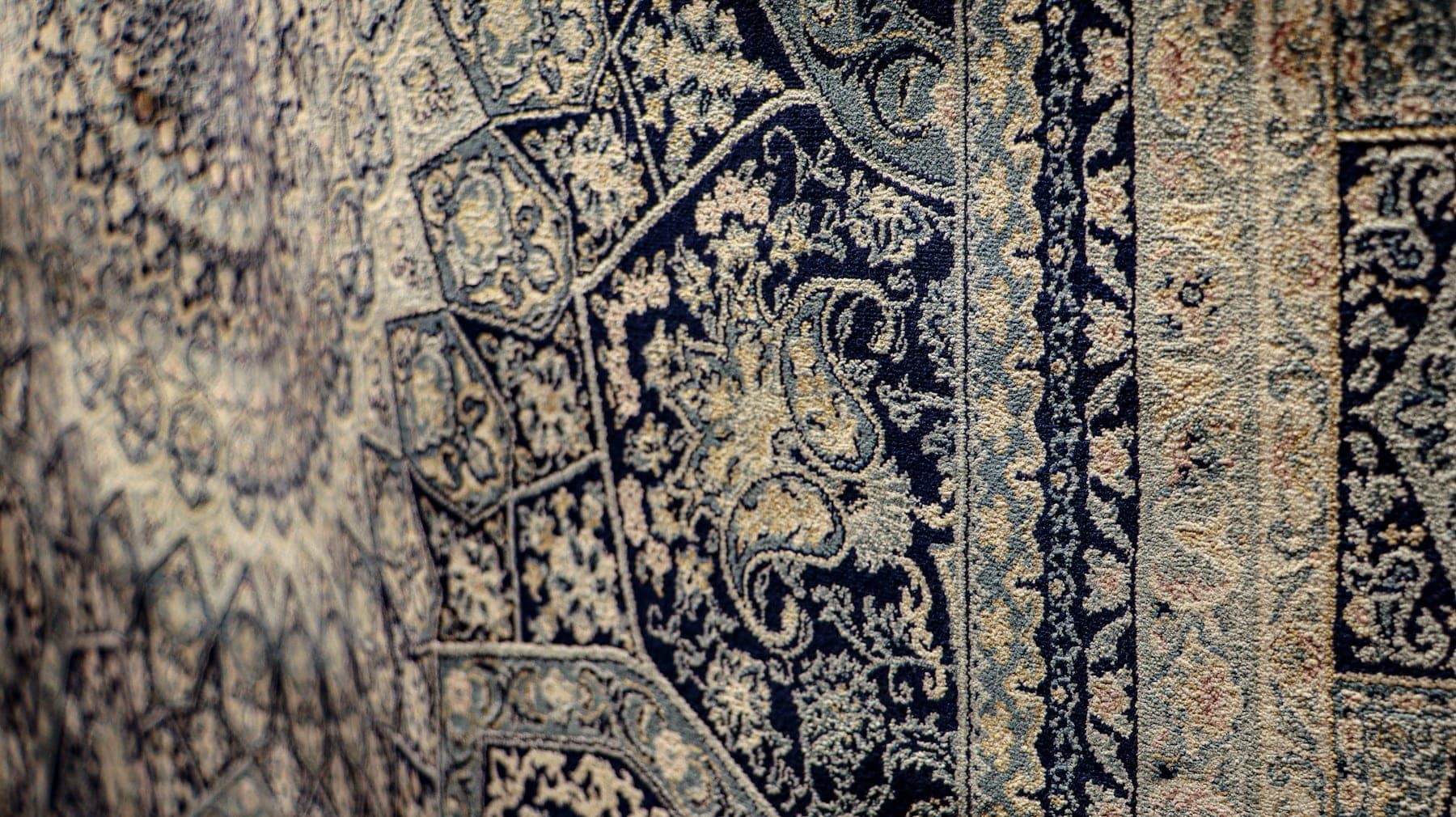
KPSI means knots per square inch, and it is the clearest single number for how fine a hand-knotted rug is. A village rug might have 40 to 80. A good city rug has 120 to 250. A Kashmiri or Qom silk can have 300 to 500, and a handful of exceptional pieces go far beyond. A 5 × 8 ft rug at 160 knots per square inch holds 921,600 knots, each tied by hand, which is why fine rugs spend months on the loom.
What the number measures
Every knot is one dot of colour in the design, like one pixel in a photograph. The more knots in each square inch, the smaller each dot, and the finer the drawing can be. At 60 knots per square inch a weaver can draw bold stars, hooks and stepped medallions. At 250 the same weaver can draw a curling vine with leaves on it. At 400, faces, birds and the veins of a leaf become possible.
That is also why the number tracks the price so closely. A 5 × 8 ft rug has 5,760 square inches. At 60 knots per square inch that is 345,600 knots; at 400 it is 2,304,000. Nearly seven times the knots means nearly seven times the hours at the loom, before a single other cost is counted.
| Knots per square inch | Knots in a 5 × 8 ft rug | What it can draw |
|---|---|---|
| 60 | 345,600 | Bold geometric patterns, village and tribal rugs |
| 160 | 921,600 | Classic city medallions and floral borders |
| 250 | 1,440,000 | Fine curving vines, detailed borders |
| 400 | 2,304,000 | Silk rugs with pictorial detail |
How to count it yourself
You need a ruler and good light.
- Turn the rug over and find a patch away from the edges.
- Lay the ruler along a row, across the width, and count the knots in one inch. On the back each knot shows as two small bumps side by side, one on each warp it uses, so count pairs, not bumps.
- Turn the ruler to run along the length, and count the rows in one inch.
- Multiply the two numbers. Ten knots across and twelve rows up is 120 knots per square inch.
In metric the same count is usually given per square decimetre or per square metre. One square metre holds 1,550 square inches, so 120 knots per square inch is 186,000 knots per square metre. Kashmiri workshops often describe a rug by the count in each direction per inch, so an 18 × 18 quality has 324 knots per square inch.
The two knots
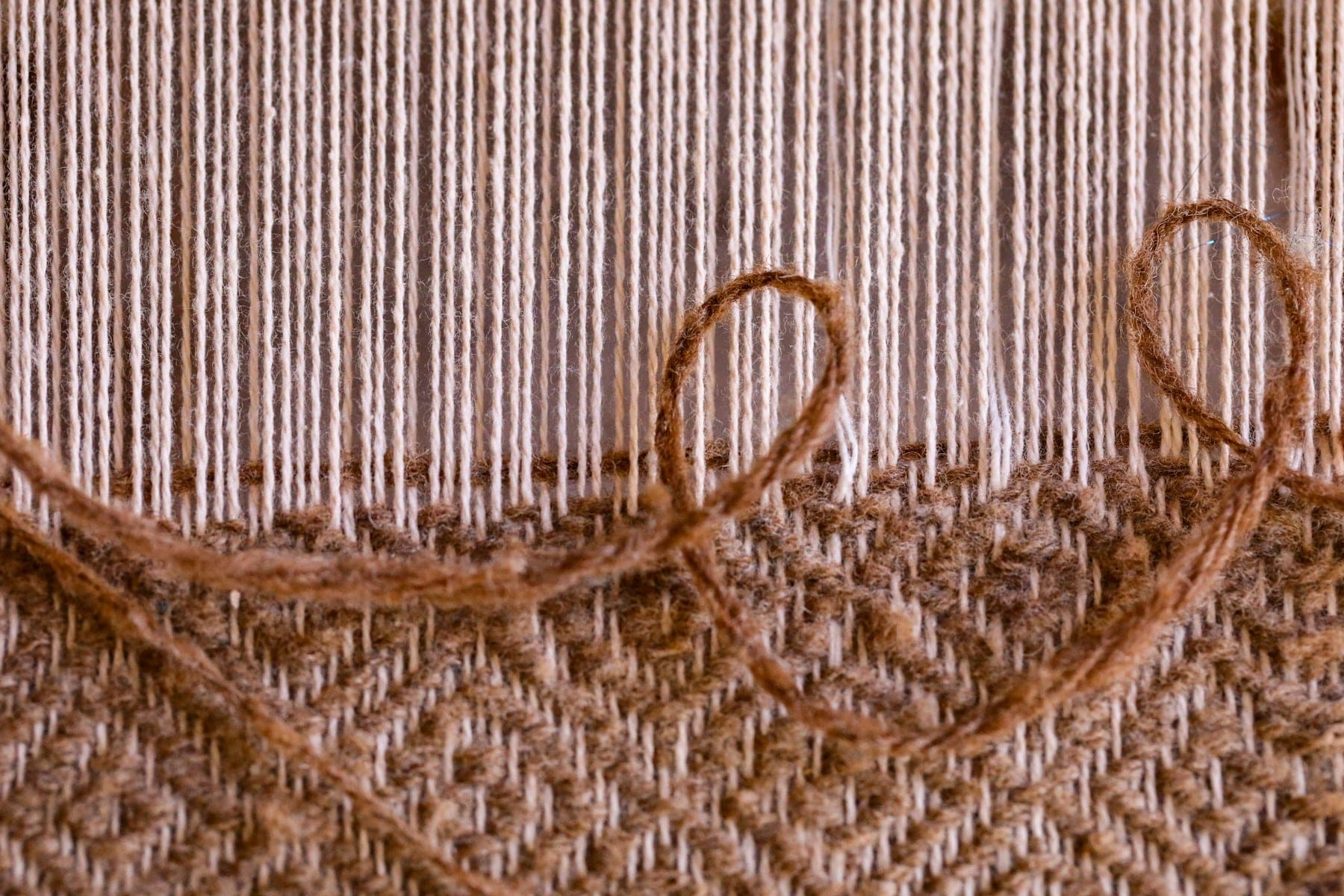
Most hand-knotted rugs use one of two knots. The symmetric knot, also called the Turkish or Ghiordes knot, wraps two neighbouring warps and brings both ends up between them. It is strong and a little bulkier, and you find it in Turkish, Caucasian and many tribal rugs, and in Heriz and Tabriz rugs from north-west Iran. The asymmetric knot, also called the Persian or Senneh knot, wraps one warp and passes under the next, with one end coming up on each side. It packs tighter and suits the fine curves of Kashan, Isfahan, Nain and Kashmiri rugs.
Both are equally durable in practice. The knot type tells you something about where and how a rug was woven; the knot count tells you how fine it is.
Finer is not always better
Higher knot counts allow finer drawing. They do not make a rug stronger. A 60 KPSI Heriz with a thick wool pile will outlast a silk rug in a busy hallway, because wool is springy and silk is not, and a thick pile has more to wear through. Choose the knot count for the design and the room: bold geometric patterns and heavy traffic suit lower counts, fine florals and pictorial rugs need higher ones.
A coarse rug with a good design and good wool is a better buy than a fine rug with a tired design and poor wool.
Fine rugs also usually have a short pile. The knots sit so close together that a long pile would blur the drawing, so the pile is clipped low, often to 5 or 6 mm. That makes them lovely to look at and less forgiving underfoot.
What else to look for
The knot count is one number. These matter as much:
- The wool. Good wool has a natural sheen from its lanolin and springs back when you press it. Dull, dry, brittle wool wears fast however fine the knotting.
- The dyes. Colours should look clear and even in the field, with slight natural variation (called abrash) in hand-dyed wool. Colour that has bled into the white around it is a warning sign.
- The straightness. Lay the rug flat. The sides should run straight and the rug should lie without waves or rolling corners.
- The finishing. Look at the sides and the fringe. The side cords should be tightly wrapped, and the fringe should be the warp running out of the rug.
How our rugs are labelled
Every hand-knotted rug on this site shows its knot count on the rug page, with knots per square metre beside it and a grid that draws one square inch at that density. We add a plain label: village weave below 60 knots per square inch, fine from 60 to 120, very fine up to 250, heirloom up to 400, and collector silk above that. The label is there to help you compare, not to rank one rug as better than another. A 70 KPSI Kazak and a 360 KPSI Kashmiri silk are both good rugs, made for different rooms.
Share this guide