Craft, 7 min read
Kashmiri silk carpets: talim, knots and patience
In Kashmir a carpet design is written as a coded script and sung at the loom. How the valley's silk rugs are made, row by row.
By The Persian Knots team,
Walk past a carpet workshop in old Srinagar and you may hear it before you see it: a low, half-sung chant of numbers and colour names. That is the talim, the written code a Kashmiri carpet is woven from, being read aloud at the loom. It is one of the most unusual systems in any craft, and it is how the valley produces some of the finest silk carpets in the world.
How the craft reached Kashmir
Tradition credits Sultan Zain-ul-Abidin, who ruled Kashmir from 1420 to 1470 and is still remembered as Budshah, the great king. He invited craftsmen from Persia and Central Asia to Srinagar, among them carpet weavers, and the valley has knotted carpets ever since. The craft grew under the Mughals, who loved Kashmir's gardens and filled their palaces with flowered carpets, and revived again in the nineteenth century when European buyers came looking for Kashmiri shawls and carpets.
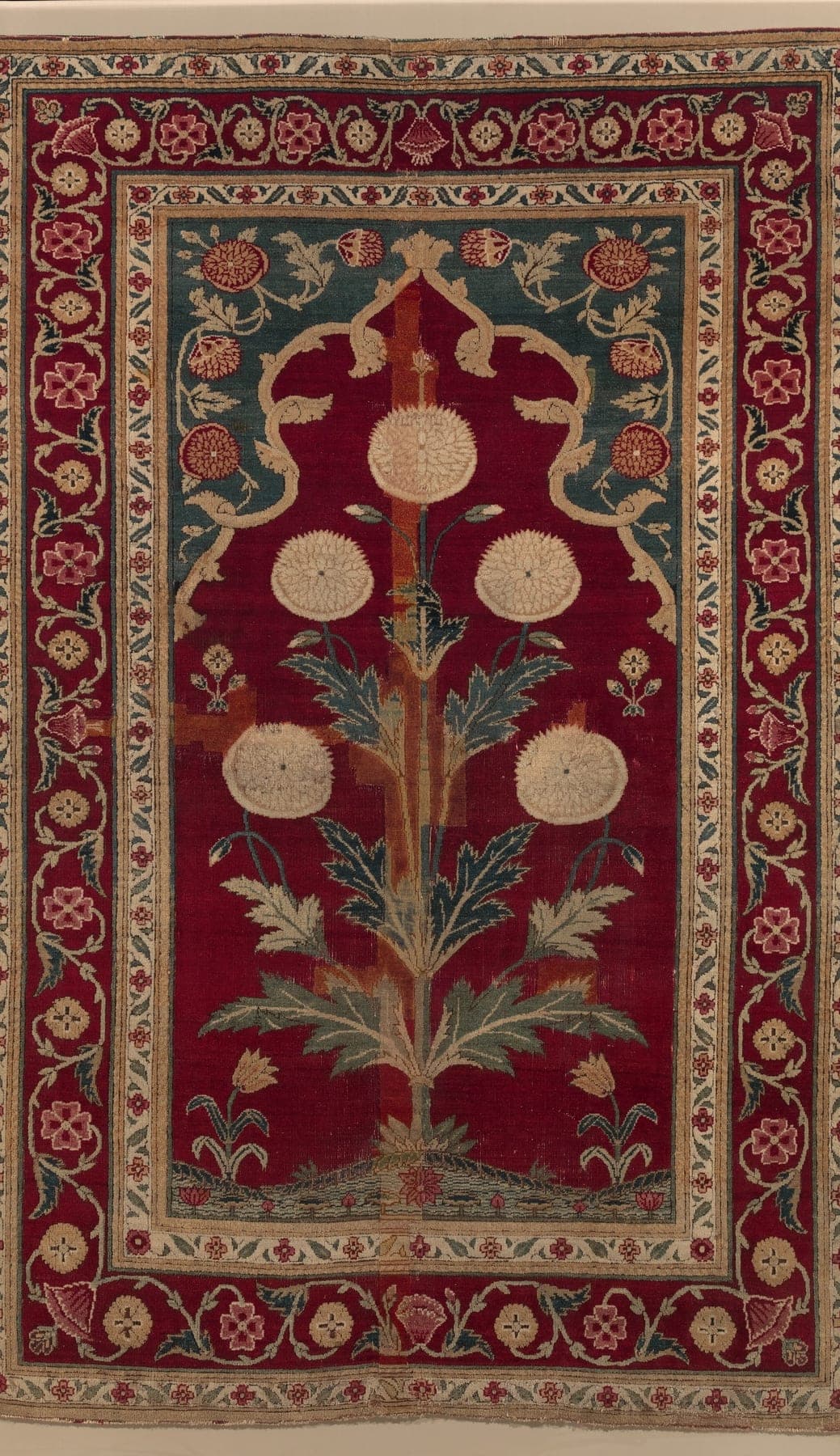
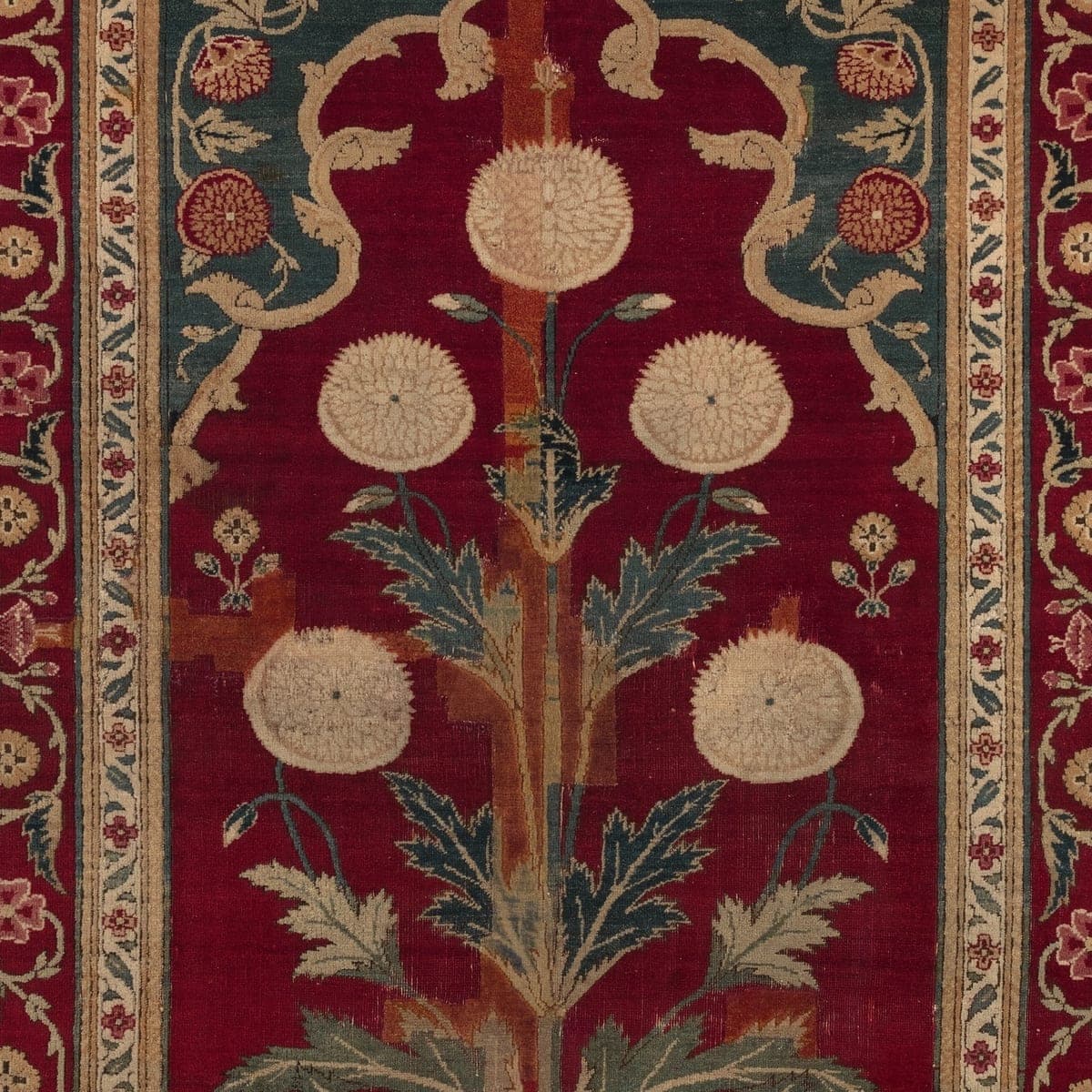
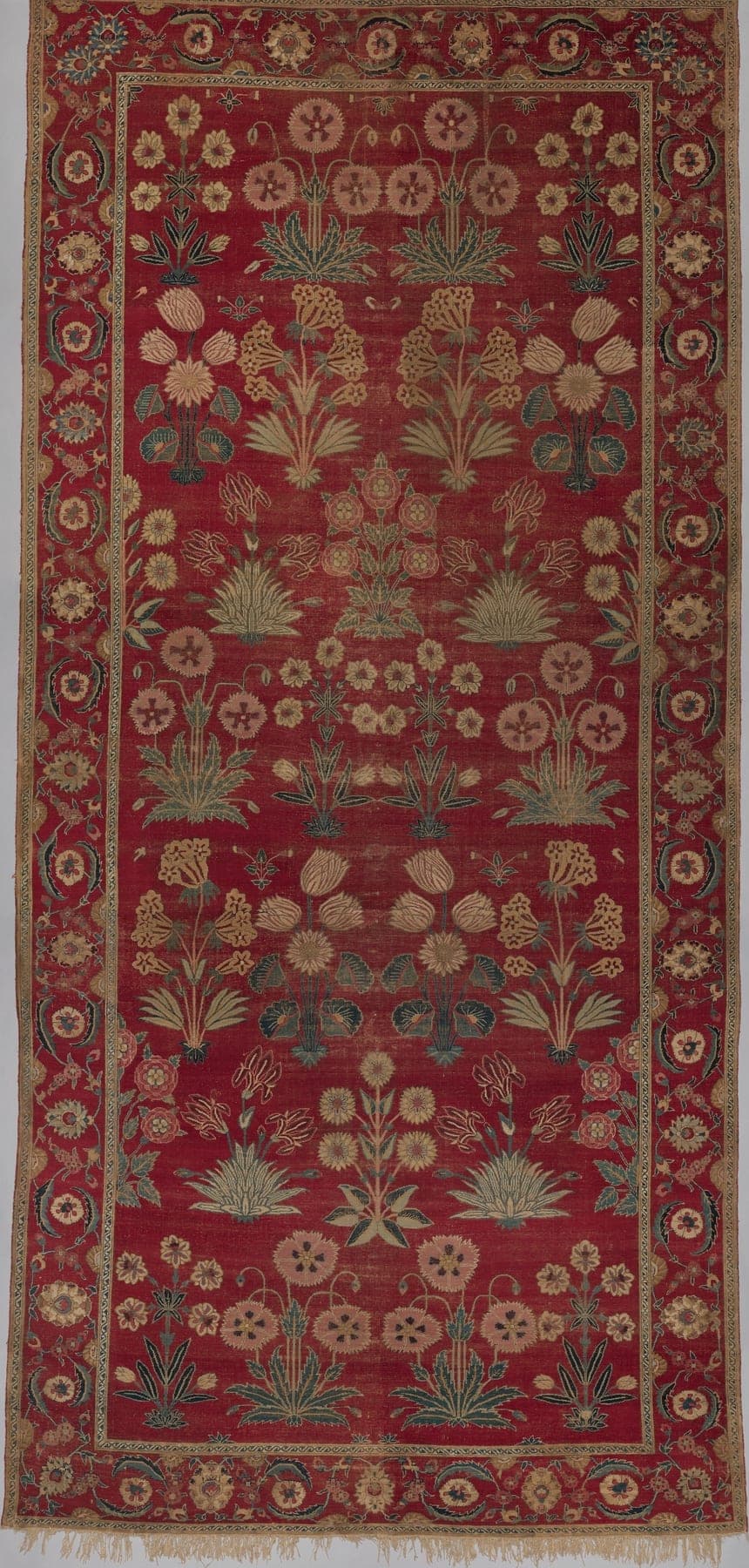
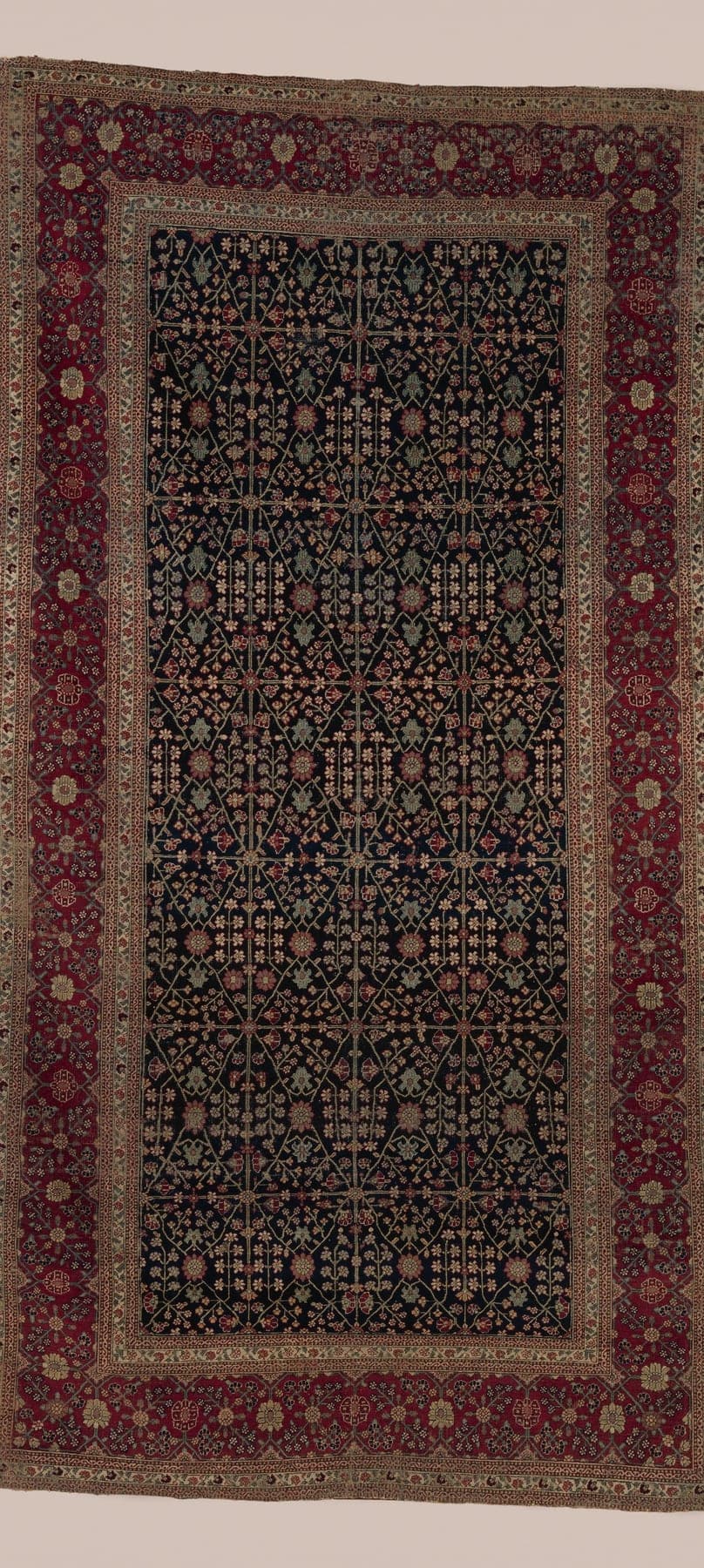
Kashmiri weavers use the asymmetric Persian knot, and most of their designs belong to the Persian and Mughal family: medallions, trees of life, vases of flowers and the garden layouts of Shalimar and Nishat.
Talim: a carpet written as a script
Every hand-knotted carpet starts as a drawing on squared paper, one square to a knot. In most weaving centres the weaver keeps that drawing, the naqsha, beside the loom and reads the colours off it square by square.
Kashmir added a step. A specialist, the talim writer, translates the drawing into a coded script, row by row. Each line of talim says, in a shorthand of symbols, which colour comes next and how many knots of it to tie. A row might read, in effect: four of dark red, one of ivory, seven of green. The talim is copied onto strips of paper and pinned above the loom.
At the loom, weavers sit side by side, each responsible for a stretch of the width. The senior weaver reads the talim aloud in a sing-song rhythm, and the others tie as they listen. The chant keeps everyone in step, row after row, often for months. A design written once can be woven again and again, in different colours or by different workshops, as long as the talim survives.
A Kashmiri carpet is drawn, then written down, then sung, one row at a time.
Silk on silk
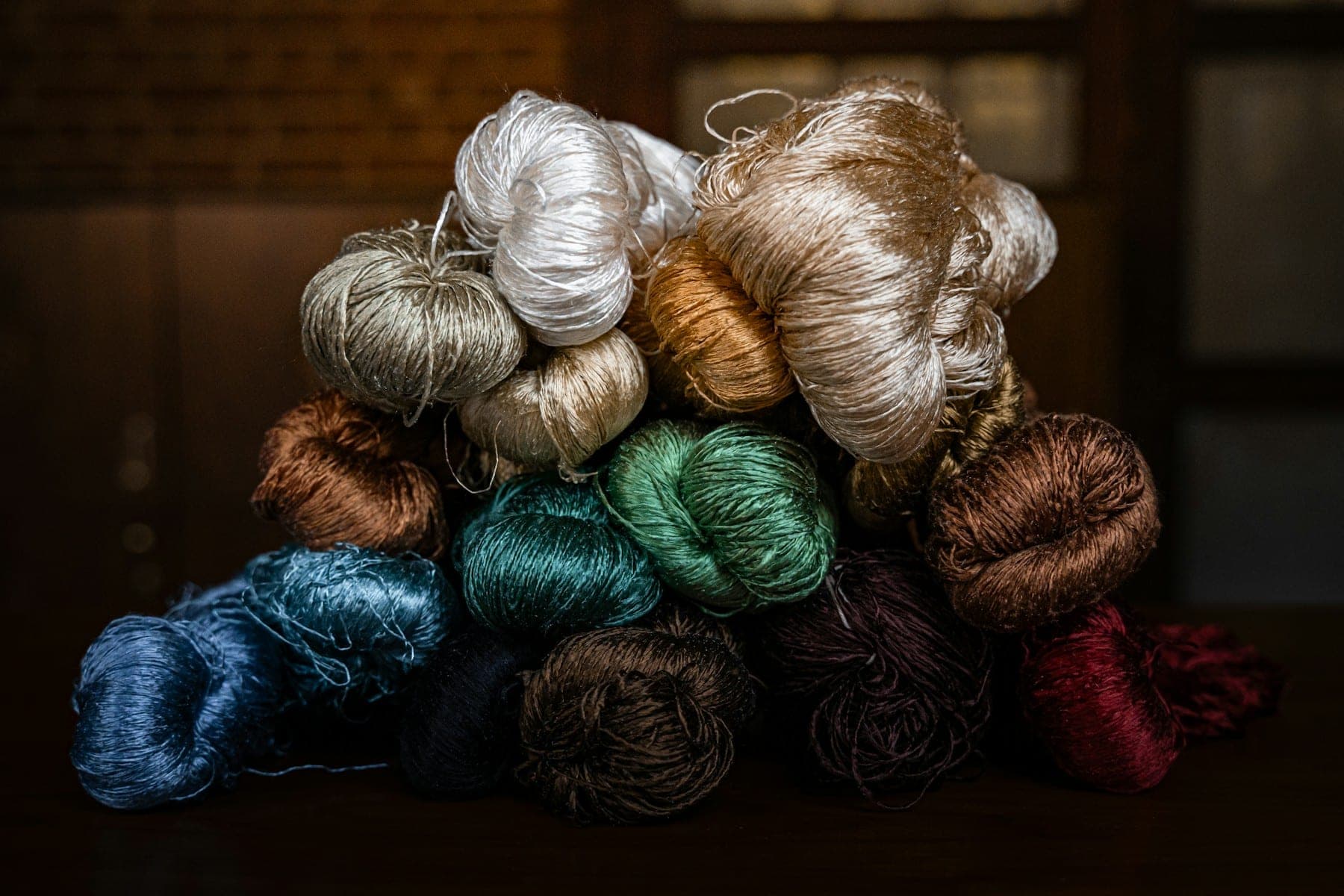
Kashmir is best known for silk. The finest pieces are silk on silk: silk pile knotted onto a silk foundation, which lets the weaver pack the knots very close. Most Kashmiri silk rugs fall roughly between 250 and 450 knots per square inch, and the workshops often describe their quality as knots per inch in each direction, so an 18 × 18 quality has 324 knots per square inch. Wool rugs and wool-and-silk rugs, with silk used to pick out highlights, are woven in the valley too.
The numbers explain the patience in the title. A 5 × 8 ft silk rug at 324 knots per square inch holds about 1.87 million knots. Fine silk knotting is slower than wool, so even with two or three weavers sharing a loom, a rug like this takes many months.
Why silk looks alive
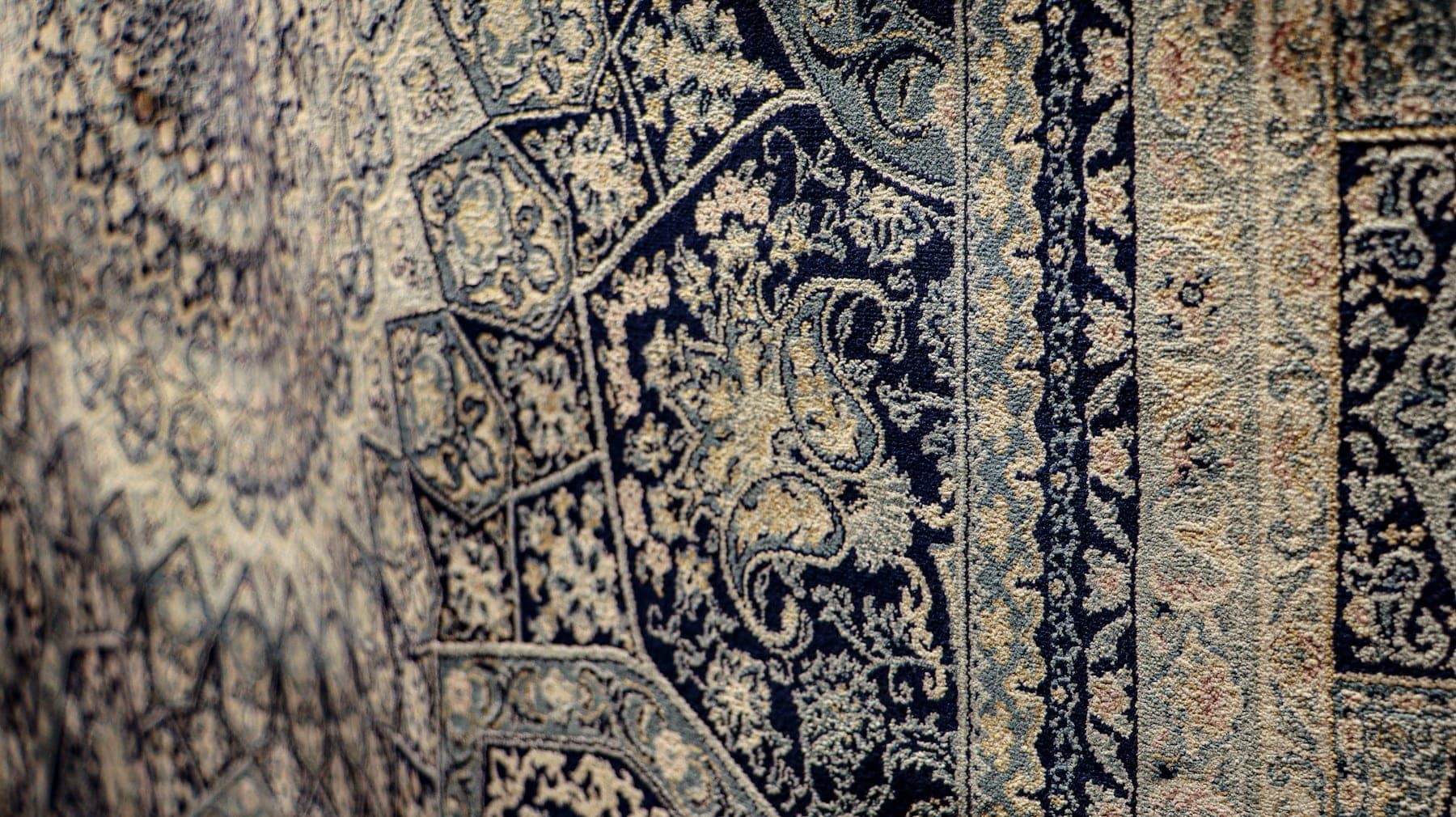
Silk pile catches light like nothing else. It also changes as you walk round it. Looking along the pile, the rug appears lighter and brighter; from the other end, against the pile, the colours deepen. A silk rug hung on a wall changes again through the day as the light moves. None of this is a fault: it is the pile doing what silk does.
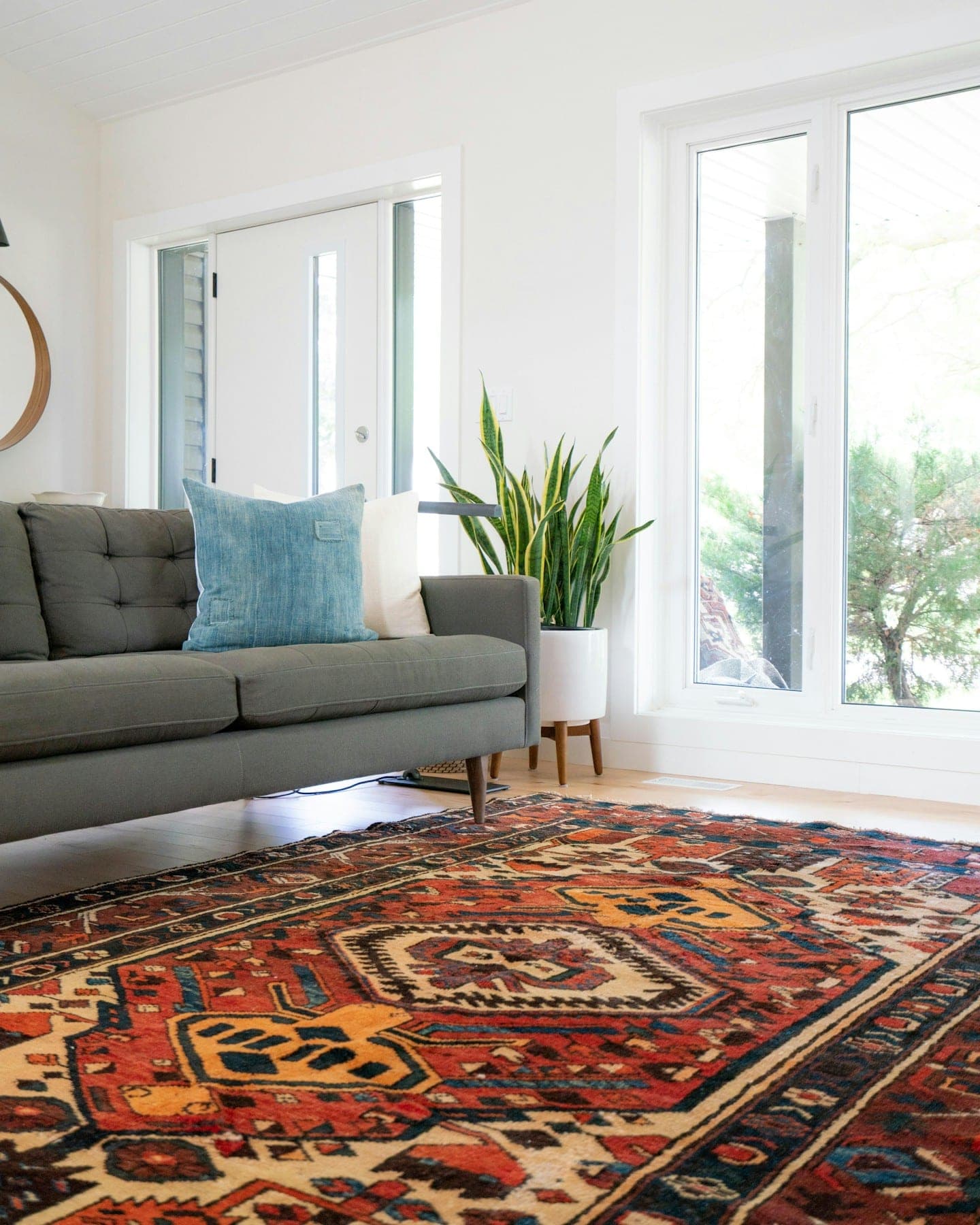
The other side of silk is that it is less springy than wool. It crushes where people walk and marks with water. Silk rugs are happiest where few feet go: a bedroom, a formal sitting room, a study, or on the wall.
The designs to know
- Tree of life. A single flowering tree rising from a vase or a mound, often with birds in the branches.
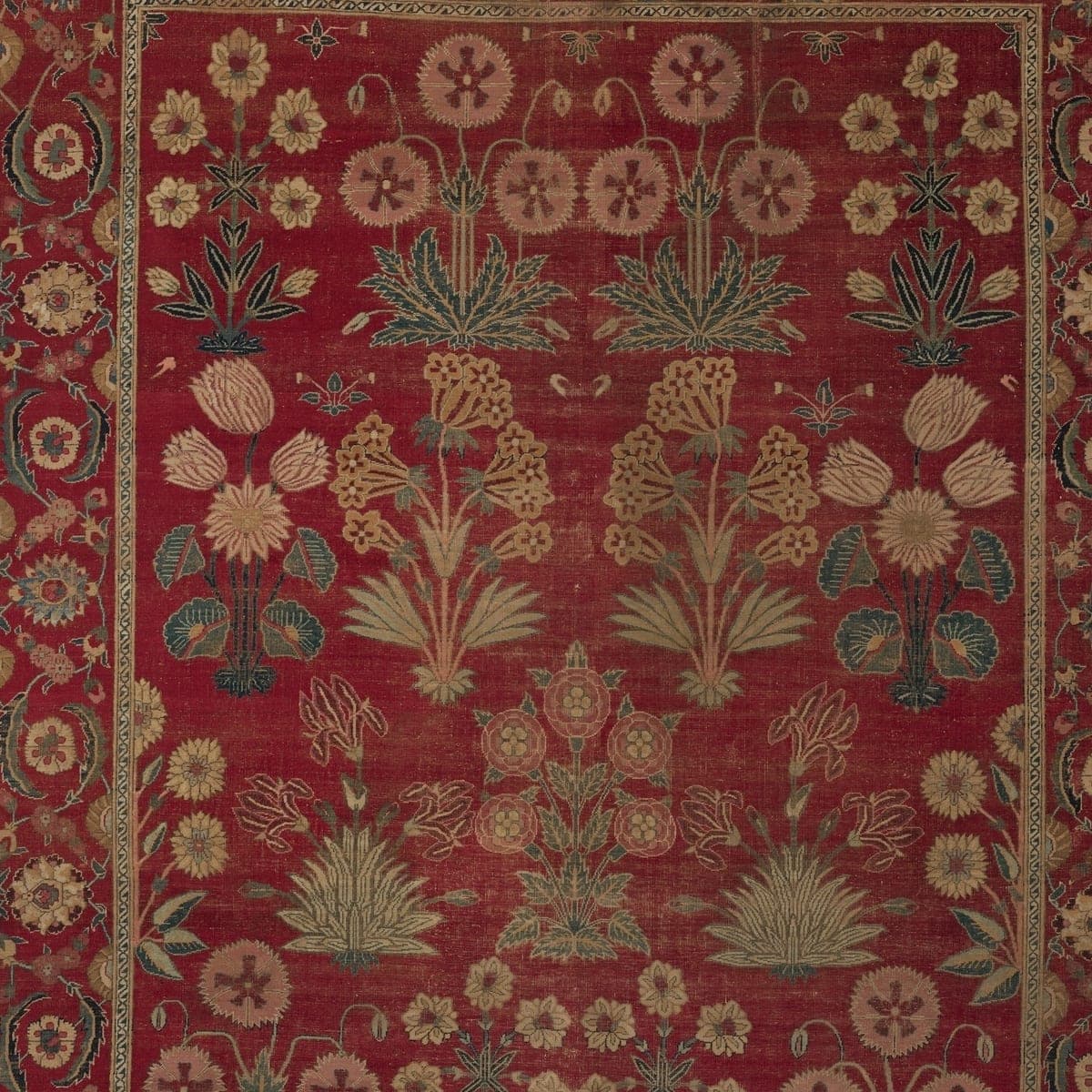
- Mughal garden. A field of flowers drawn almost like botanical paintings, sometimes set in arched niches.
- Chinar. The leaf of the great plane trees that line Kashmir's lakes and gardens, turning red and gold in autumn.
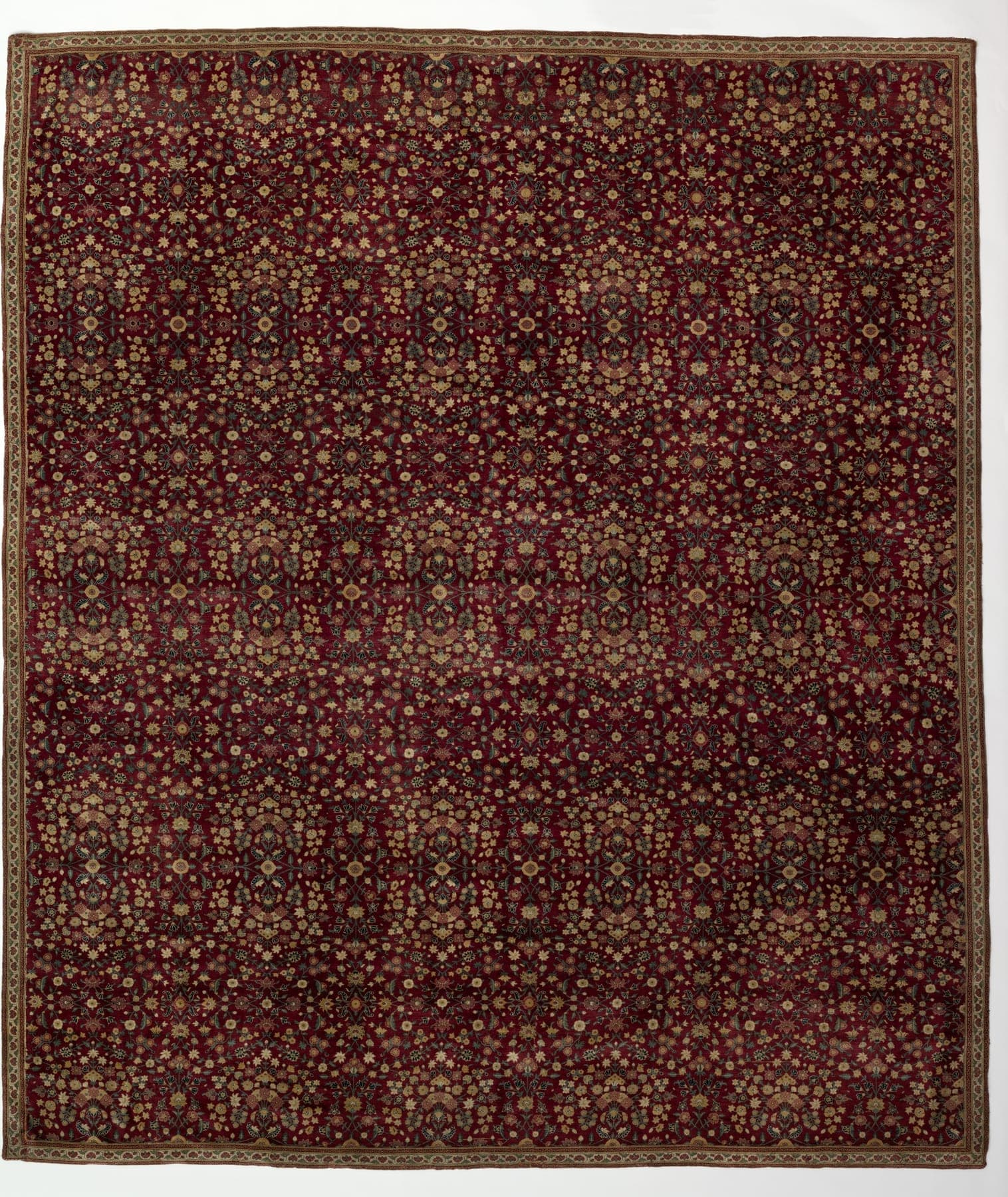
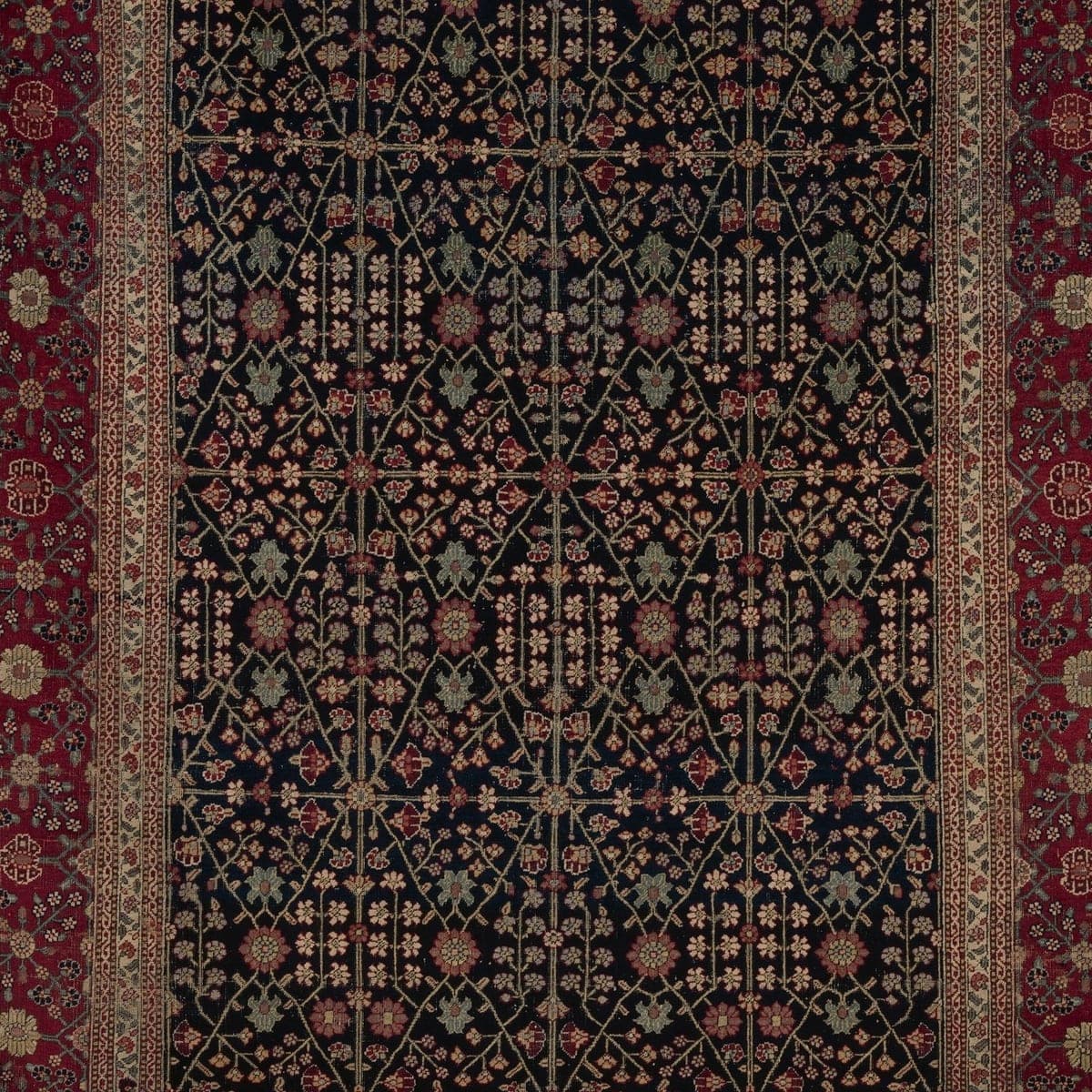
- Millefleur. A thousand small flowers spread across the field, a design Kashmiri weavers made their own.
- Shalimar and Nishat. Garden carpets named after the Mughal gardens on the shore of Dal Lake.
Real silk, art silk and viscose
Because silk is expensive, "silk rugs" are sometimes nothing of the kind. Viscose, sold as art silk or bamboo silk, is a fibre made from wood pulp. It has a similar shine when new, costs a fraction of silk, and is often used in hand-tufted and machine-made rugs. It is also weaker, especially when wet, and it flattens and yellows with wear.
A real silk rug is almost always hand-knotted at a high knot count, and an honest seller will put the fibre in writing. Every rug on this site lists its materials by percentage, so viscose and bamboo silk are named as what they are.
Choosing a Kashmiri rug
- Decide where it will go. Silk on silk for low-traffic rooms or a wall; wool and silk for a living room.
- Look at the drawing. At 300 knots per square inch and above, flowers should have petals and leaves should have veins. Wobbly outlines at a high claimed count are a warning.
- Check the back. The design should show crisply on the back, knot by knot, with no glue or backing cloth.
- Ask about the origin. A Kashmiri rug is woven in Kashmir. Rugs woven elsewhere in Kashmiri designs are fine rugs too, but they should be labelled as such.
Kashmir's hand-knotted carpets carry a geographical indication, a protected name like Darjeeling tea. Buying one supports a craft that is still learned at the loom, one chanted row at a time.
Share this guide