Craft, 9 min read
A short history of Persian carpets
From a 2,400-year-old carpet found in the Siberian ice to the court workshops of Tabriz and Isfahan, and how Persian designs came to be woven in India.
By The Persian Knots team,
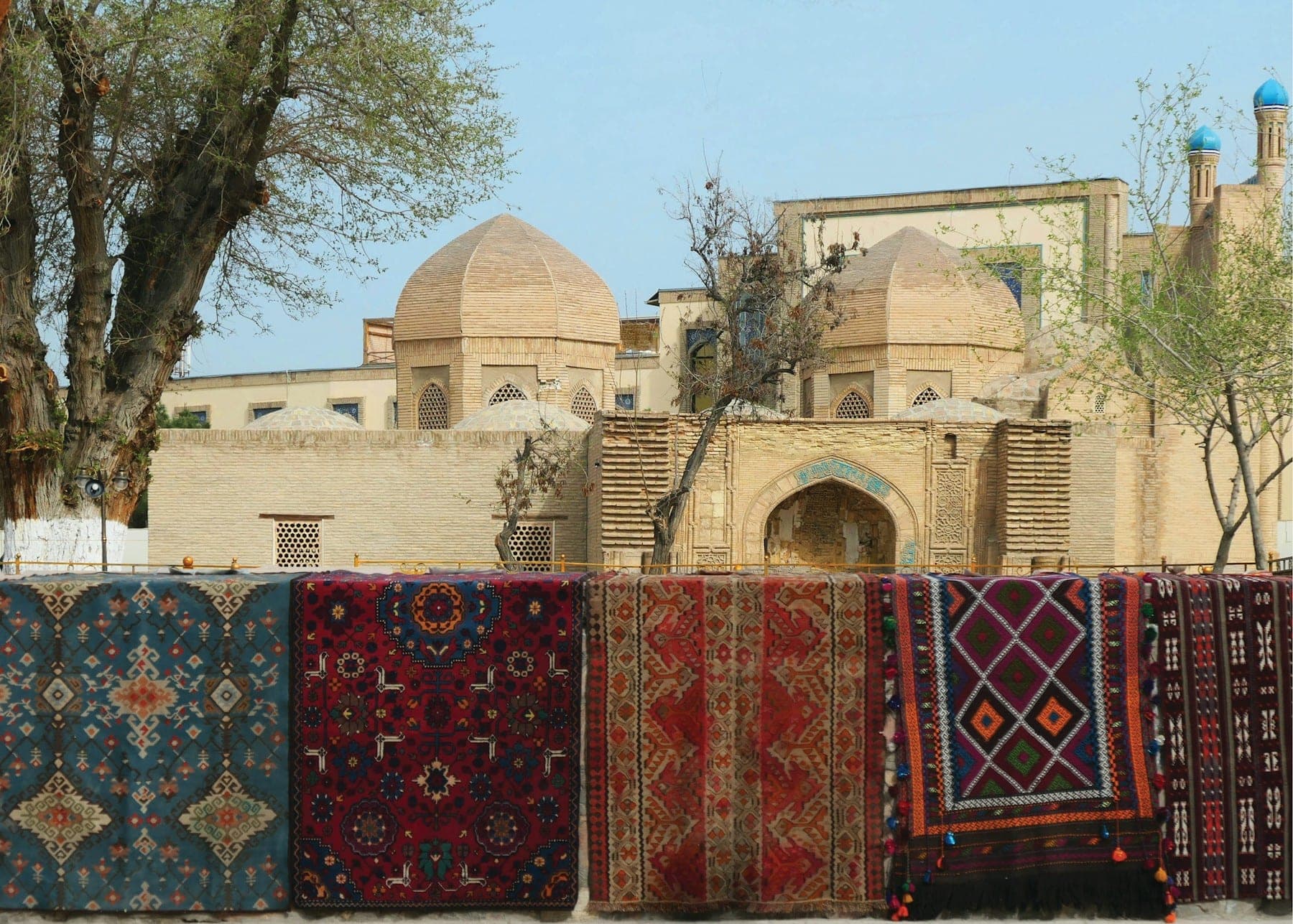
"Persian" is a design tradition, not only a country. Carpets in the Persian style have been knotted in Tabriz and Kashan for five hundred years, in Agra and Lahore for four hundred, and in Bhadohi, a few hours from Varanasi, for well over a century. Here is how that tradition grew, and what it means when you buy a Persian-design rug today.
Frozen in the ice
The oldest knotted-pile carpet we have was found in 1949, frozen into a burial mound in the Pazyryk valley of the Altai Mountains in Siberia. The archaeologist Sergei Rudenko dated it to around the fifth century BCE. It measures about 1.8 by 2 metres and holds roughly 36 symmetric knots in every square centimetre, a density a good workshop would be proud of today. Its borders show horsemen and grazing deer around a field of star-like squares.
Nobody knows for certain where it was woven. Some scholars see Achaemenid Persian work; others, a local craft that had learned from Persia. Either way, it proves that by 400 BCE knotting pile was already a mature skill, with a long history behind it that has not survived. It is now in the State Hermitage Museum in St Petersburg.
The garden carpet of Ctesiphon
Written sources fill some of the gap. The best-known story concerns the Sasanian kings, who ruled Persia until the Arab conquest in the seventh century. Their palace at Ctesiphon, near modern Baghdad, is said to have held an enormous carpet called the Spring of Khosrow: a garden in winter, with paths, streams and flower beds woven in silk, gold and jewels. When the city fell in 637 CE, the carpet was cut into pieces and shared out as spoils. None of it survives, but the idea of the carpet as a garden, laid out in beds and watercourses, runs through Persian design to this day.
The court workshops
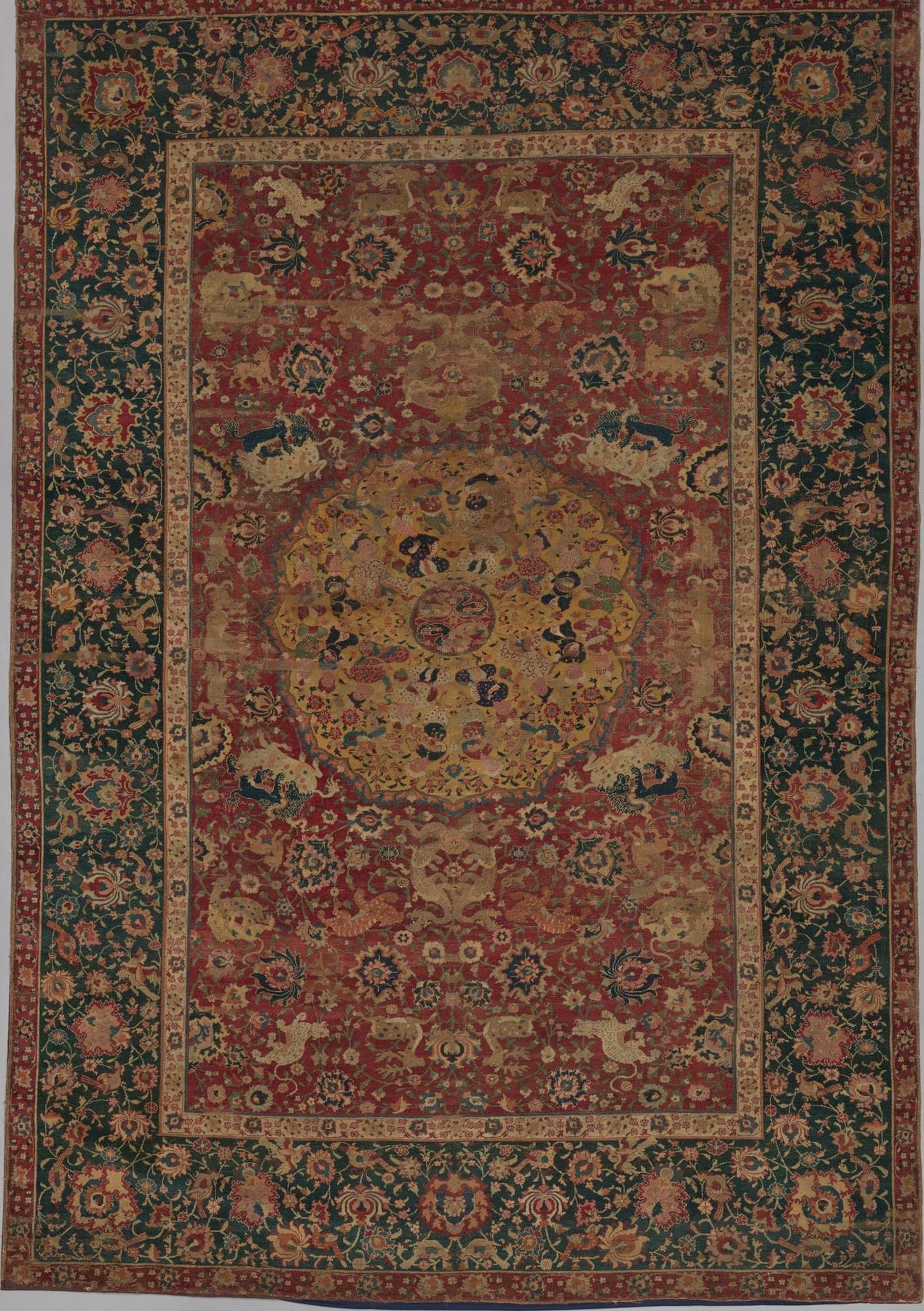
The great age of Persian carpets came under the Safavid dynasty, which ruled Iran from 1501. Shah Tahmasp and later Shah Abbas I set up royal workshops in Tabriz, Kashan, Kerman and, after Abbas moved his capital there in 1598, Isfahan. Artists from the court's manuscript studios drew the designs full size on squared paper, one square to a knot, and master weavers turned them into carpets.
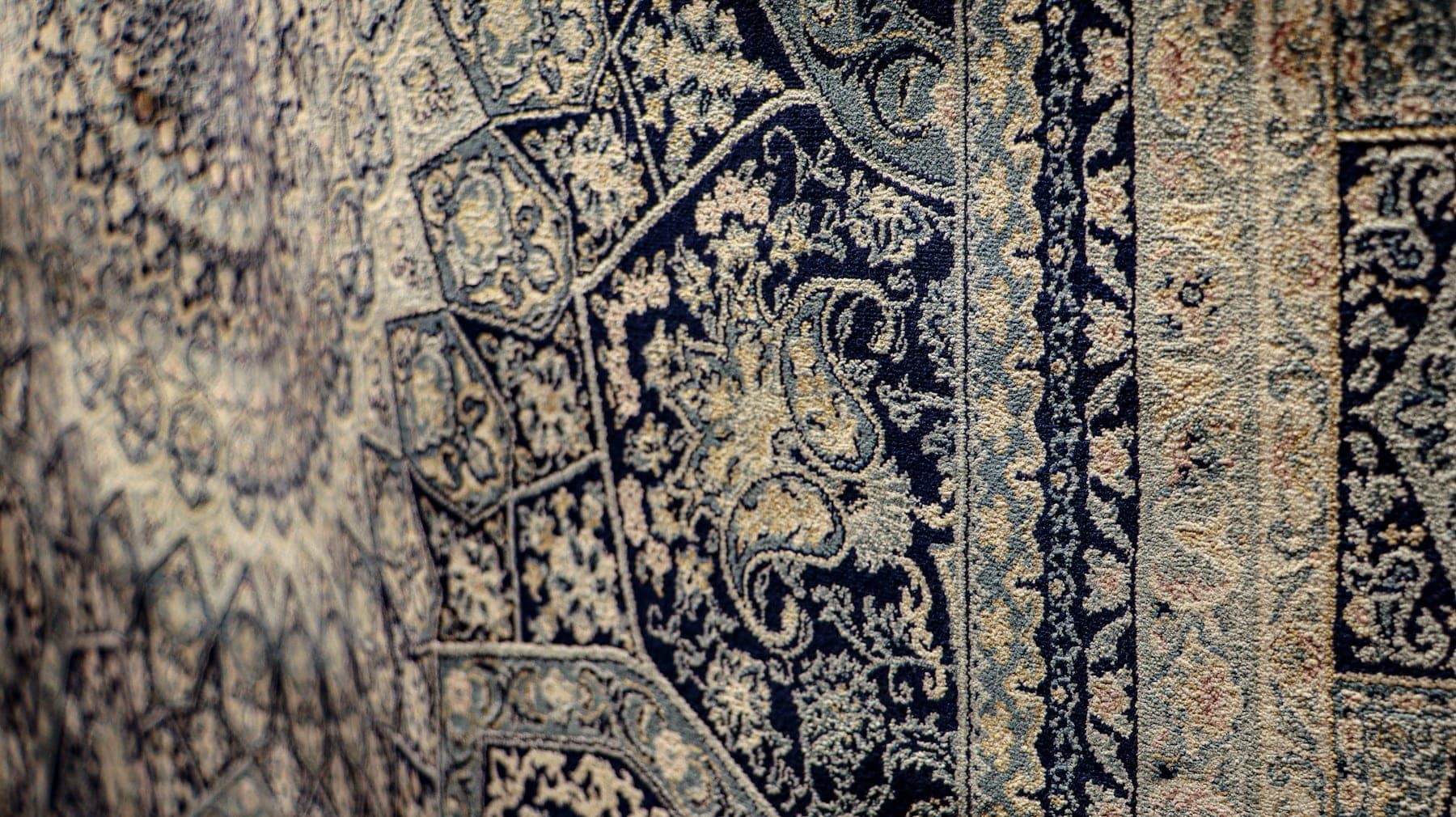
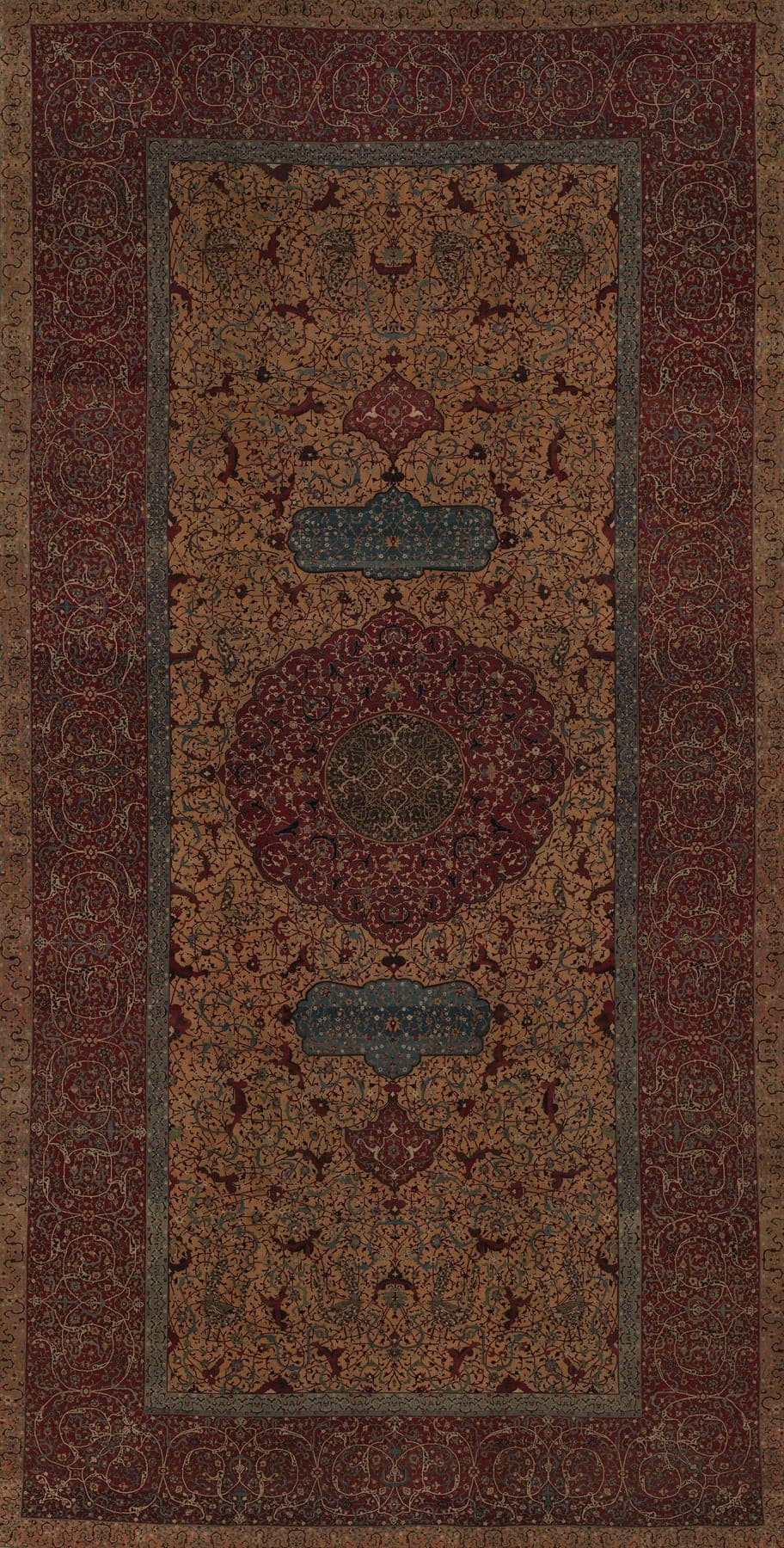
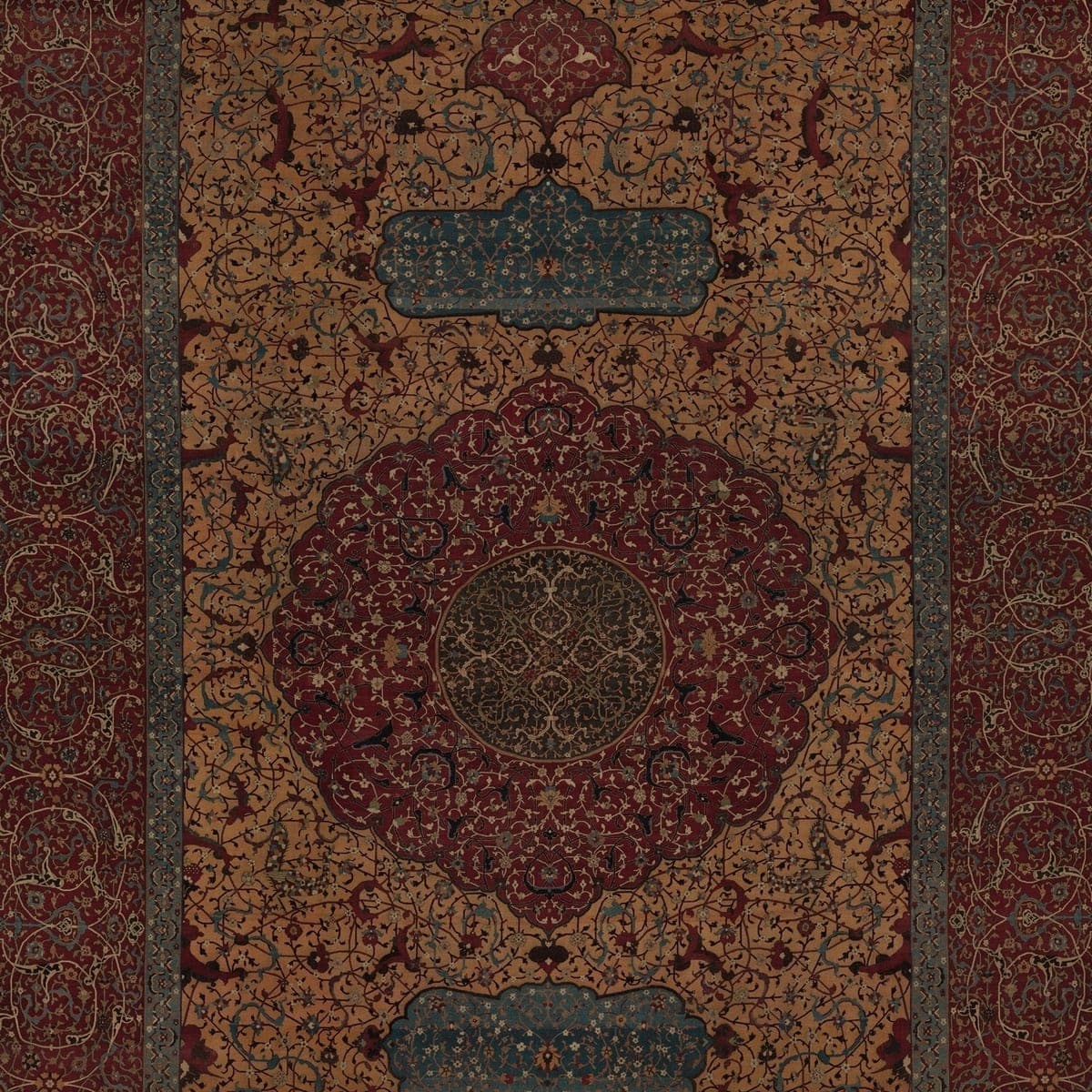
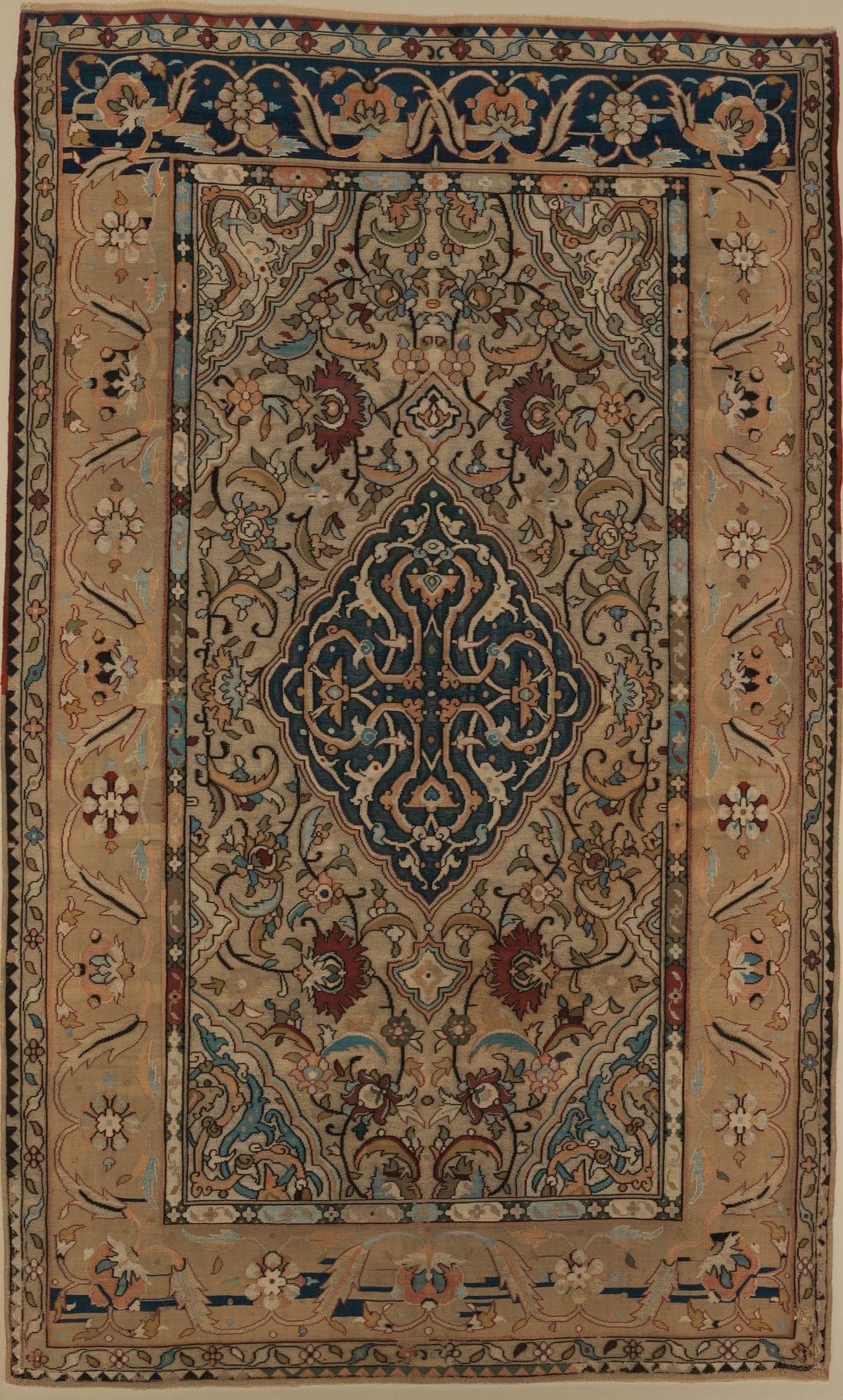
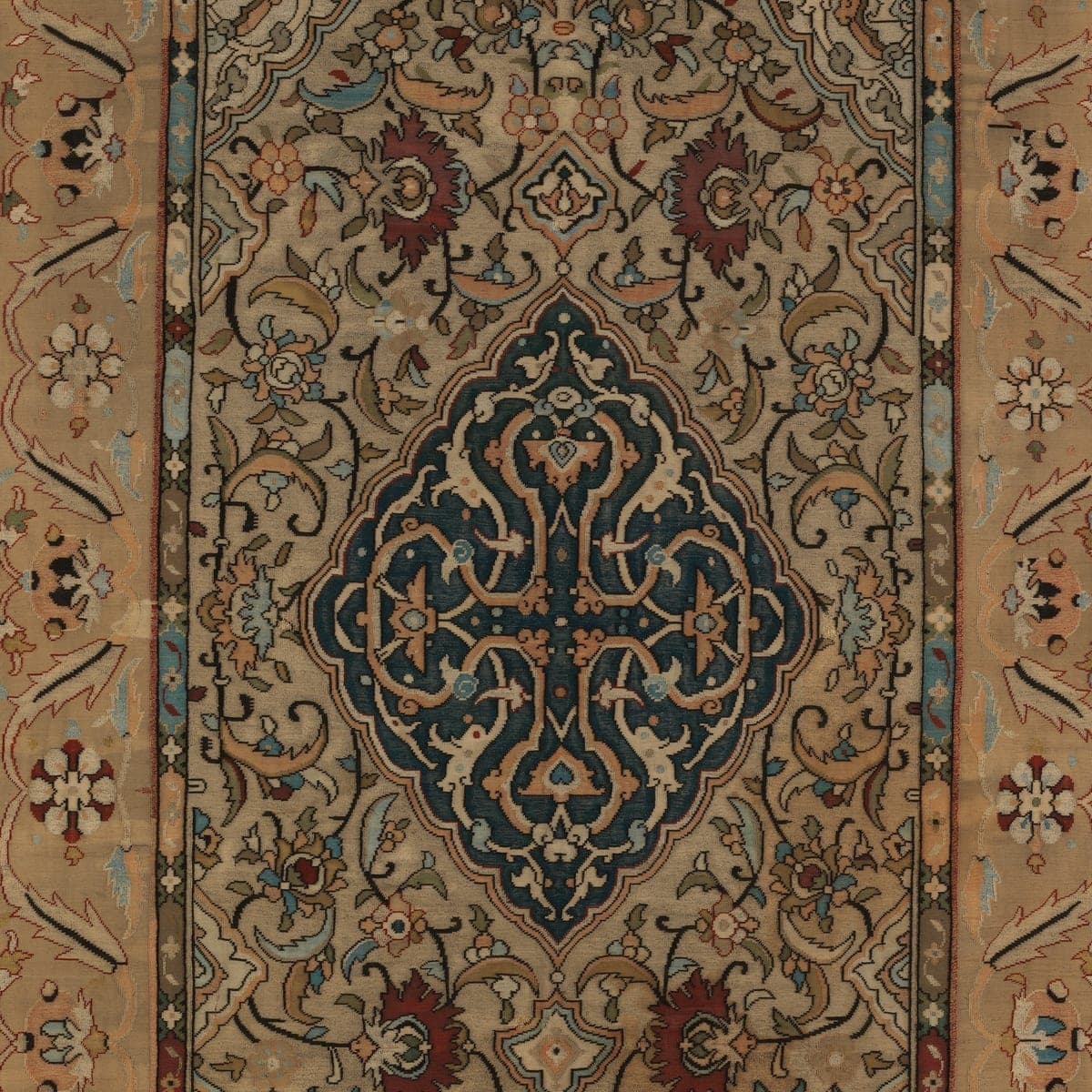
This is where the Persian look we recognise was born: a central medallion with quarter-medallions in the corners, fields of curling vines and palmettes, and borders drawn with the same care as the illuminated pages of a book. The designs moved from straight lines to curves, which needed finer knotting, which in turn needed the asymmetric Persian knot.
The most famous carpet of all dates from this time. The Ardabil carpet, made for the shrine of Sheikh Safi in Ardabil, is dated in its own inscription to 1539–40 and signed by Maqsud of Kashan. It measures about 10.5 by 5.3 metres and holds roughly 340 knots per square inch across its whole surface. It hangs today in the Victoria and Albert Museum in London.
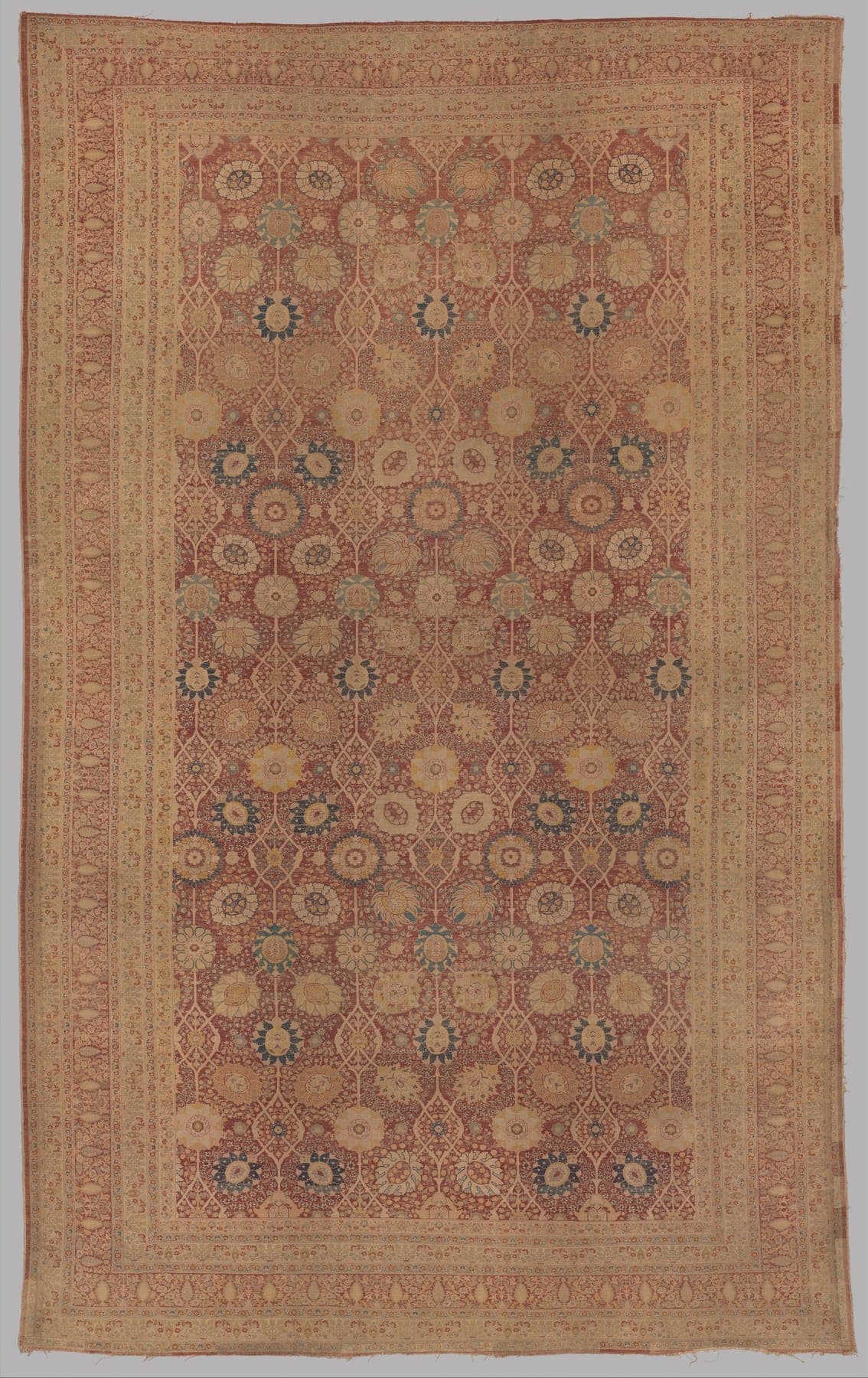
Shah Abbas also sent silk carpets brocaded with gold and silver thread as diplomatic gifts to the courts of Europe. When a group of them was shown at the Paris Exposition of 1878 by a Polish prince, visitors assumed they were Polish, and the name "Polonaise" has stuck to them ever since.
India learns the Persian knot
Persian weavers did not stay in Persia. In the late sixteenth century the Mughal emperor Akbar, who admired Persian art, brought Persian weavers to set up imperial workshops at Agra, Fatehpur Sikri and Lahore. Their carpets began as close copies of Persian models and soon developed a character of their own: naturalistic flowers drawn almost like botanical paintings, animals, and the deep reds that India's dyers were famous for.
Kashmir had its own route. The valley's carpet craft is traditionally traced to the fifteenth-century Sultan Zain-ul-Abidin, who invited craftsmen from Persia and Central Asia to Srinagar. The coded pattern script Kashmiri weavers still use, the talim, grew from that meeting. We tell that story in Kashmiri silk carpets: talim, knots and patience.
Weaving for the world
After the fall of the Safavids in 1722, carpet making in Persia shrank back to villages, tribes and small town workshops. It revived in the nineteenth century because Europe and America wanted carpets. Merchants in Tabriz organised weaving for export, and firms such as Ziegler & Co., which set up in Sultanabad, now Arak, in 1883, commissioned rugs in softer colours and larger sizes for Western rooms. Many of the names still used for designs today, Heriz, Sarouk, Mahal and Bakhtiari among them, became famous in this period.
India followed the same path. Carpets woven in the jails of Agra and Lahore were sold in London in the late nineteenth century, and the Bhadohi and Mirzapur belt in Uttar Pradesh grew into India's largest centre for hand-knotted carpets, weaving Persian designs for buyers across the world. Jaipur, Agra, Kashmir and Panipat each built their own specialities alongside it.
A Persian rug today
Today "Persian" can mean three different things, and a good seller tells you which.
- Made in Iran. Woven in Iran in a Persian design: Tabriz, Kashan, Isfahan, Qom, Nain, Kerman, Heriz and many more. Iran-made rugs cannot be imported into the United States, which withdrew the licence that had allowed them in 2018.
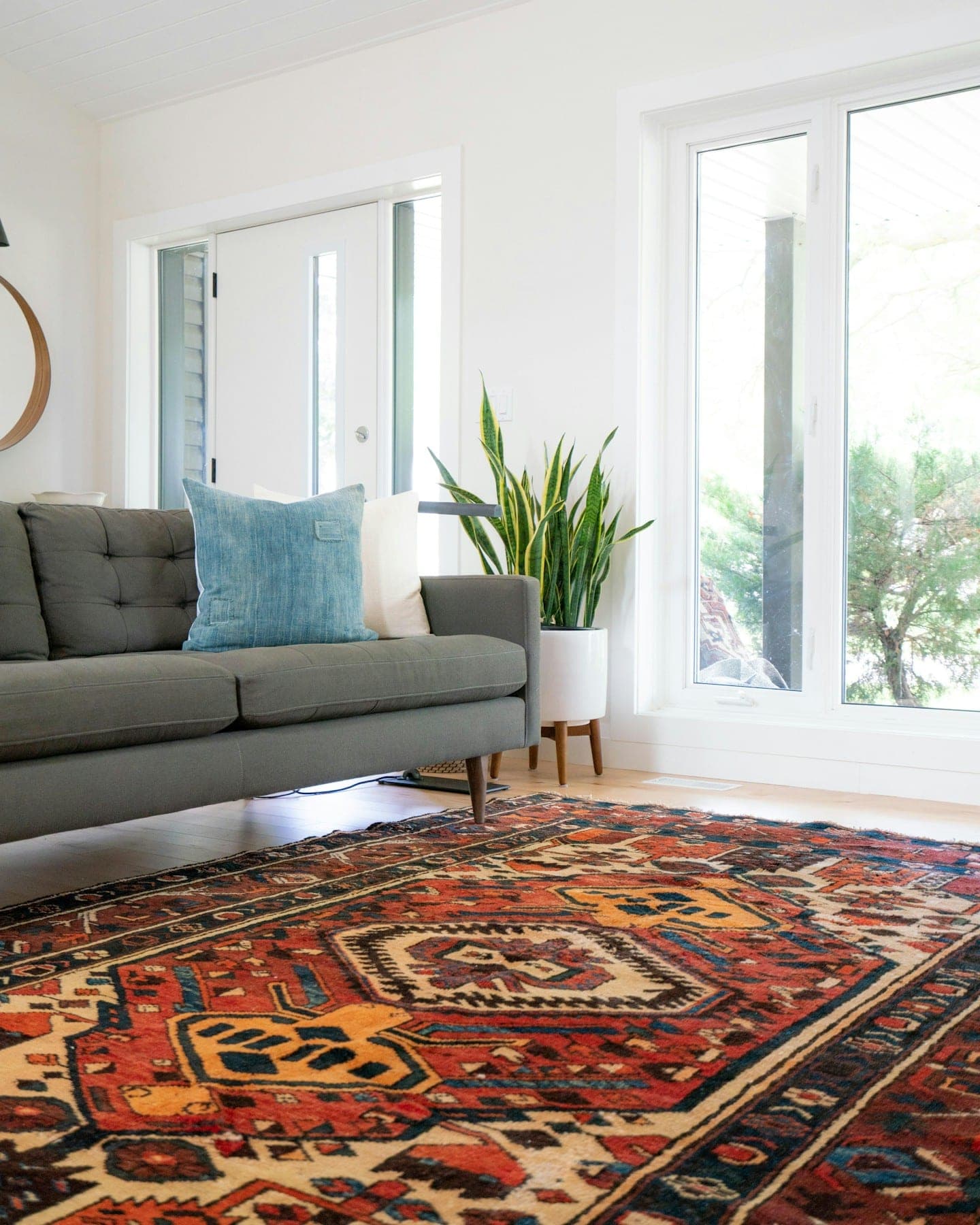
- Indo-Persian. A Persian design hand-knotted in India, usually in Bhadohi, Jaipur, Agra or Kashmir. These are real hand-knotted rugs, often woven to the same knot counts as their Iranian models, and labelled as made in India.
- Persian-style. A Persian design made by hand-tufting or on a power loom. The look is similar; the construction, lifespan and price are not.
Every rug on this site names its style, its technique and where it was woven, so an Indo-Persian Kashan is never presented as an Iranian one. Our two Iran-made rugs say so on the rug page, and show a notice to visitors in the United States.
How to read a Persian design
A few words cover most of what you will see:
- Medallion. The central motif, often with quarter-medallions in the corners. Kashan, Tabriz and Kerman rugs are known for it.
- Herati. A small repeating pattern of a flower inside a diamond, flanked by curving leaves. It fills the field of many Bijar, Senneh and Mahal rugs.
- Boteh. The teardrop shape the West calls paisley, seen in Persian rugs long before it reached Scottish shawls.
- Garden. A field divided into panels like the beds and channels of a Persian garden, as in Bakhtiari rugs.
- Prayer. An arch at one end, like the niche in a mosque wall that faces Mecca.
Knowing the names makes shopping easier, and it makes a museum visit more fun. The next time you stand in front of a Safavid carpet, count the colours in the border and look for the corner medallions: the same drawing is on the loom in Bhadohi this morning.
Share this guide