Guides, 7 min read
Hand-knotted, hand-tufted or machine-made? What you're paying for
Three rugs can look alike in a photo and differ ten times in price. Here is how each is made, how long each lasts and which suits which room.
By The Persian Knots team,
Three rugs can look alike in a photograph and differ ten times in price. The difference is how the pile is fixed to the rug. That one fact decides how long the rug lasts, how it wears, how it feels underfoot and what it is worth in twenty years.
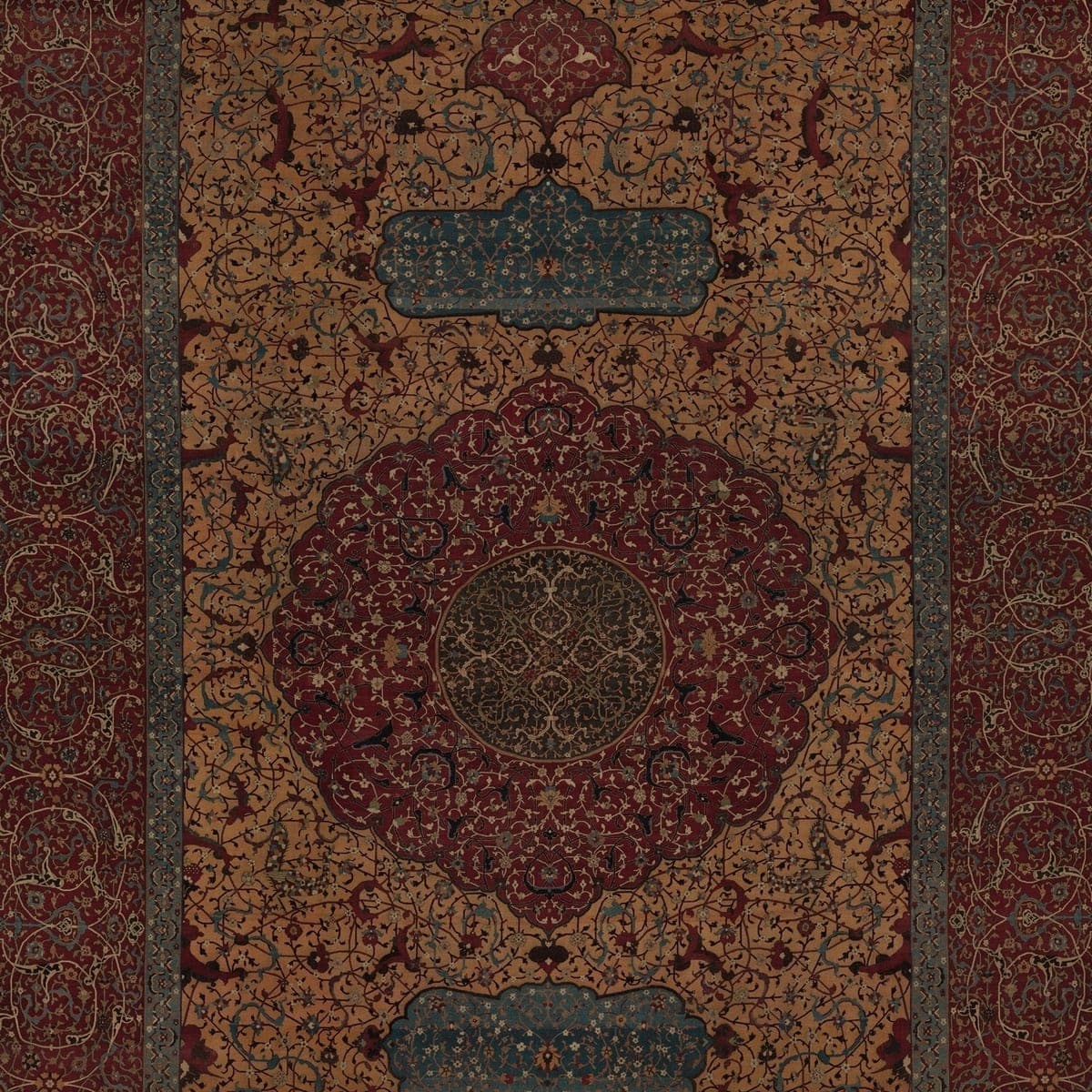
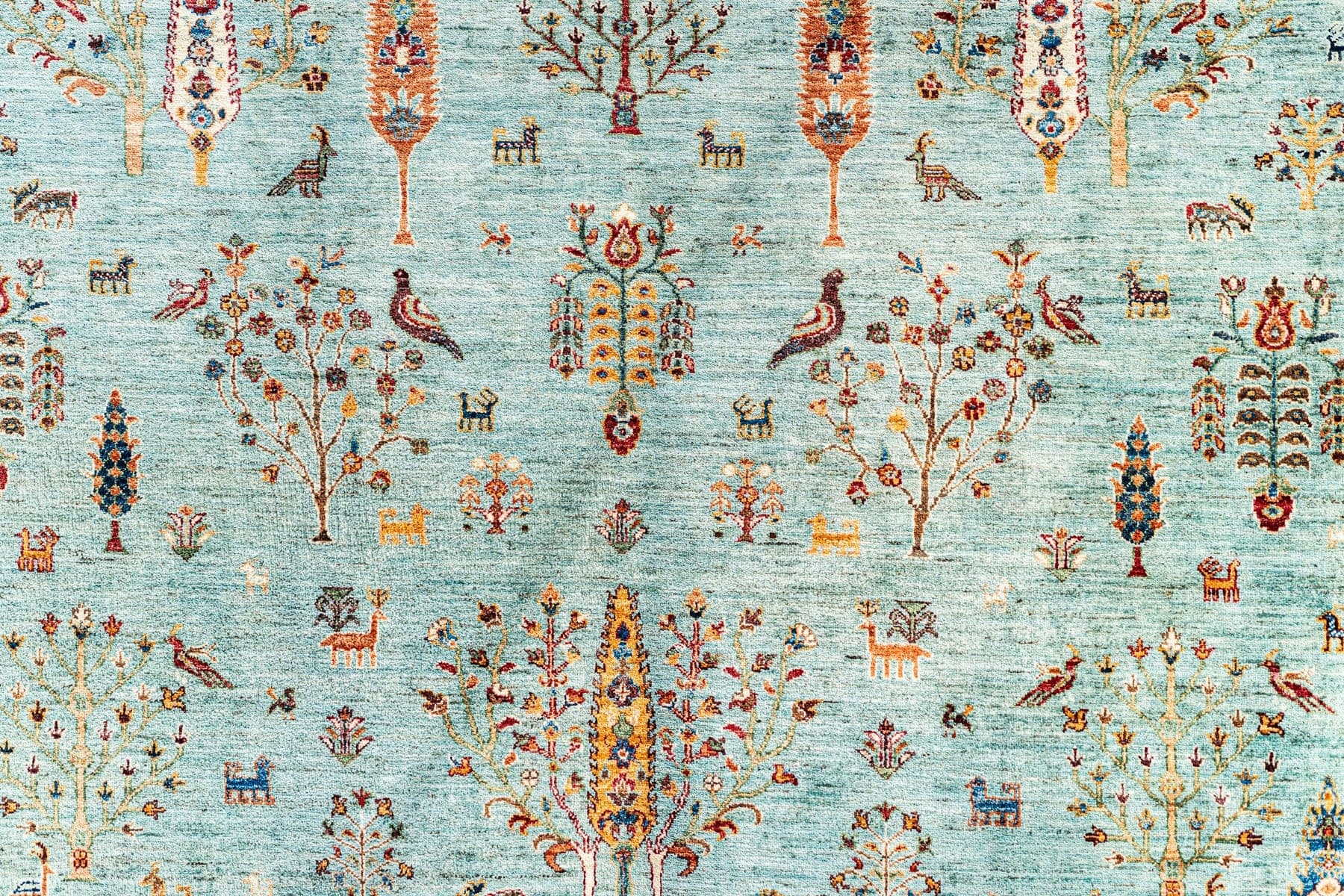
Hand-knotted
A hand-knotted rug starts with warp threads, usually cotton, wool or silk, strung tight from the top of a loom to the bottom. The weaver ties a short length of yarn around the warps, cuts it with a knife and moves to the next. When a row is finished, one or two weft threads are passed across and the row is beaten down with a heavy metal comb, called a panja in India. Then the next row begins. The rug grows from the bottom up, knot by knot.
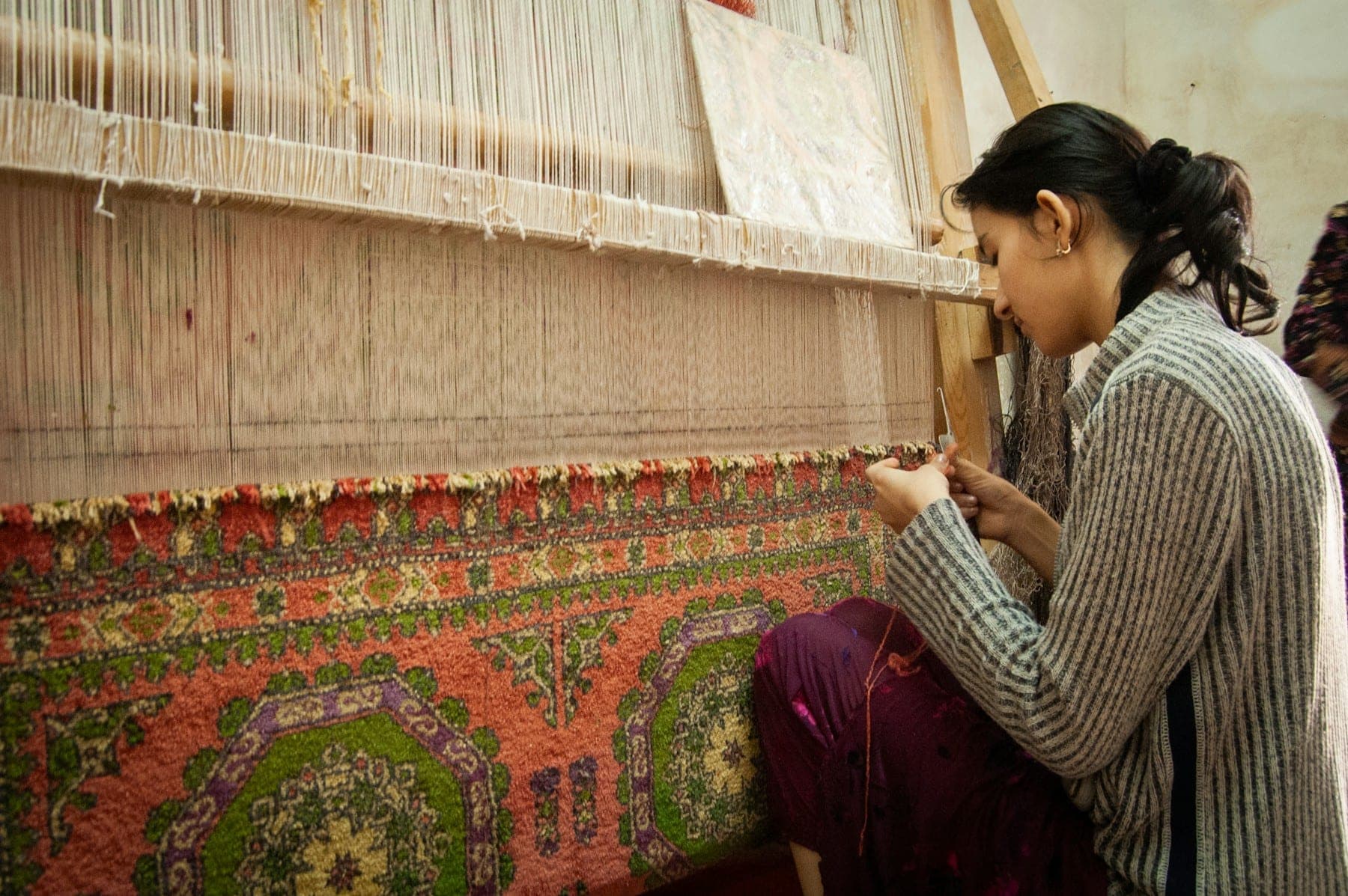
Two knots are in common use. The symmetric or Turkish knot wraps two neighbouring warps and brings both ends up between them. The asymmetric or Persian knot wraps one warp and passes loosely under the next, which lets the weaver pack knots tighter and draw finer curves. Either way, every knot is tied by hand and locked in by the weft. Nothing is glued.
The numbers explain the price. A 5 × 8 ft rug at 160 knots per square inch holds 921,600 knots. A skilled weaver ties somewhere around 6,000 to 10,000 knots in a working day, so at 8,000 a day one weaver would need about 115 working days for the knotting alone. Then comes washing, drying, clipping the pile level and finishing the edges.
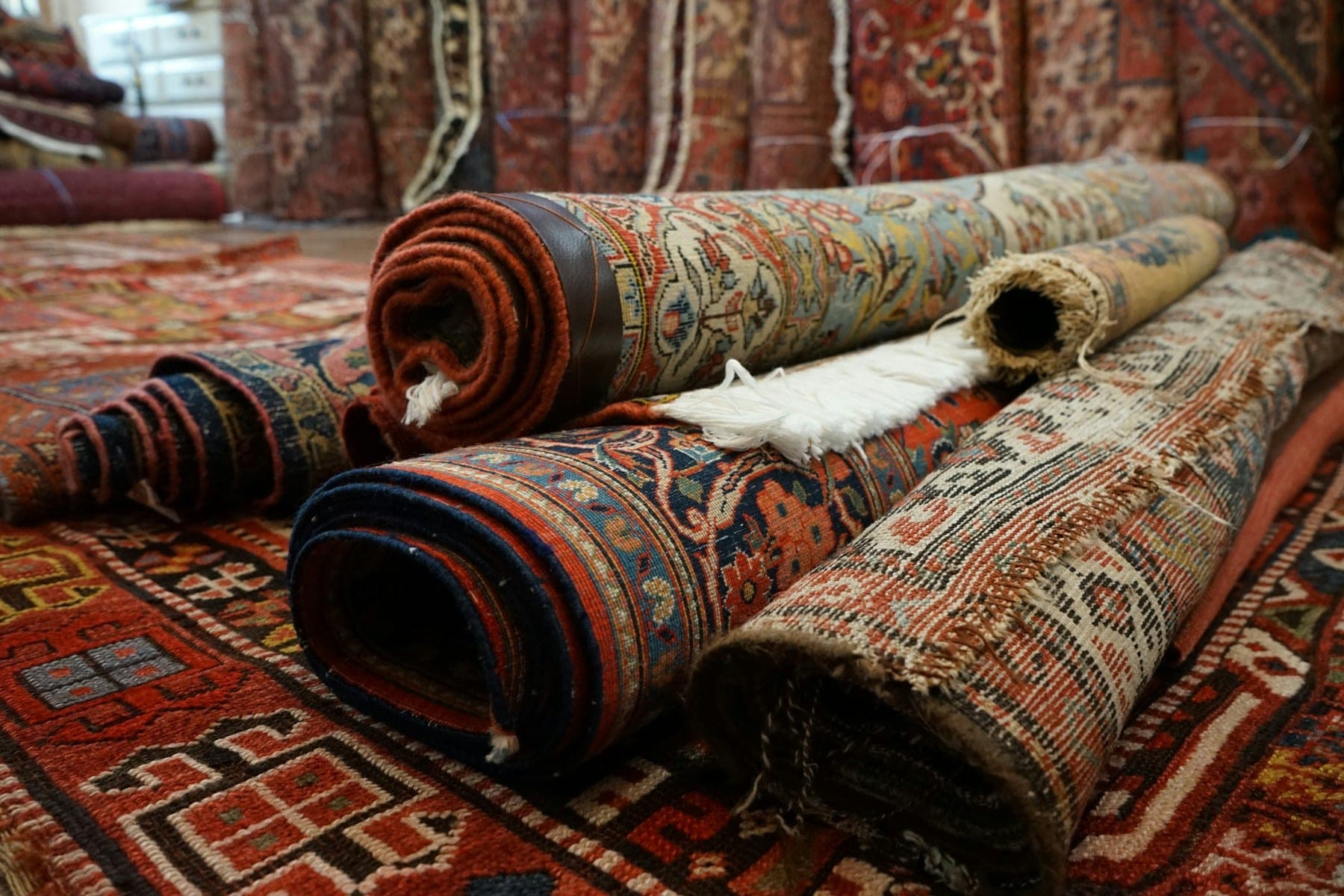
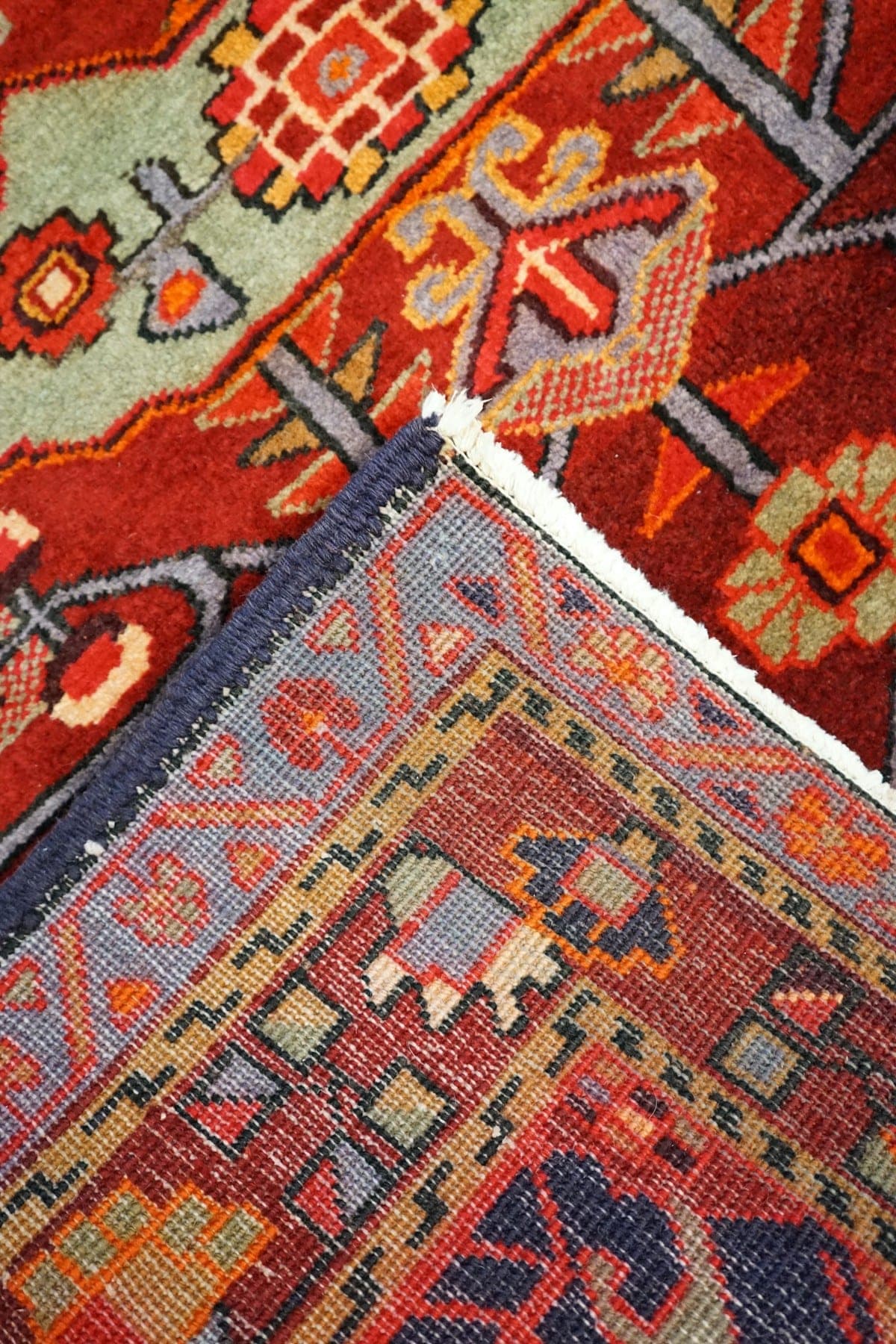
How to tell. Turn a corner over. The design shows on the back almost as clearly as on the front, drawn in tiny individual knots, with slight irregularities that a machine would not make. The fringe is the warp itself running out of the rug, not a strip sewn on afterwards.
How long it lasts. A well-made wool rug looked after sensibly lasts fifty years and more. Many of the rugs sold as antiques today were woven over a century ago.
Hand-tufted
A hand-tufted rug is made on a frame rather than a loom. The design is drawn onto a cotton canvas stretched on the frame, and the maker uses a hand-held tufting gun to punch loops of yarn through the canvas, following the drawing. The loops are cut to make a cut pile, or left for a loop pile. The back is then coated with latex to hold the tufts, and a second cloth is glued over it to finish.
It is skilled work and it takes days rather than months, which is why a tufted rug costs a fraction of a knotted one of the same size. It also makes things a loom cannot: curved edges, sculpted pile at two heights, and bold modern designs with large areas of flat colour.
How to tell. The back is covered with a plain cloth, usually cotton canvas, and you cannot see the pattern through it. The fringe, if there is one, has been sewn on. A new tufted rug often smells faintly of latex for a few weeks.
How long it lasts. The yarn is often the same wool as in a knotted rug; the limit is the latex. After some years of traffic and cleaning it dries and stiffens, and tufts can start to loosen. In a bedroom or a lightly used living room, expect ten to fifteen good years. Expect some shedding in the first few months, which settles with regular vacuuming.
Machine-made
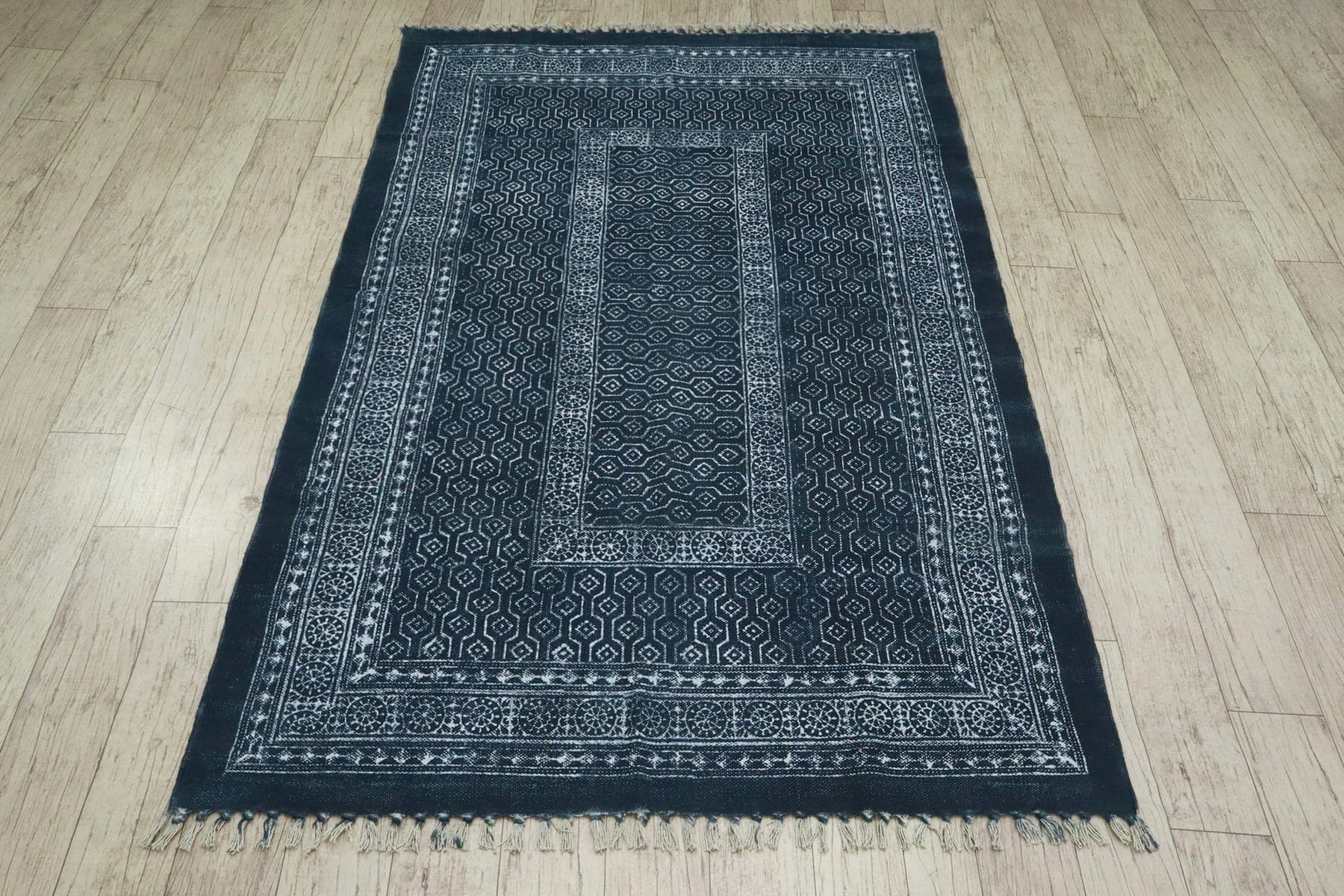
Machine-made rugs are woven on electric power looms, the same Wilton and Axminster looms that make fitted carpet. The pile is woven in with the backing in one pass, at a speed no weaver can match, and every rug off the line is identical. Most are made of polypropylene, polyester or viscose; some are wool.
Synthetic pile shrugs off spills and can go in a kids' room, a rental flat or a covered veranda without anyone worrying. Identical pieces also help when a hotel or an office needs thirty of the same rug. On the other hand, synthetic pile flattens along walkways and does not spring back the way wool does, and a machine-made rug has little value when you sell or pass it on.
How to tell. The back shows a perfectly regular grid, often with a stiff backing. The edges are machine-overcast (serged), and the fringe is sewn or glued on. Colours and pattern are identical from one end to the other.
How long it lasts. Five to fifteen years, depending on the fibre and the traffic.
Side by side
| Hand-knotted | Hand-tufted | Machine-made | |
|---|---|---|---|
| How the pile is held | Each knot tied around the warp and locked in by weft | Loops punched through canvas and glued with latex | Woven in by a power loom |
| Making a 5 × 8 ft rug | Months | One to three weeks | Hours |
| The back | Shows the design, knot by knot | Covered with cloth | A regular machine grid |
| The fringe | The warp itself | Sewn on | Sewn or glued on |
| Typical life | Fifty years and more | Ten to fifteen years | Five to fifteen years |
There is a fourth kind worth knowing: the flatweave. Kilims, dhurries and soumaks have no pile at all; the weft threads themselves make the pattern. They are thin, light, often reversible and very hard-wearing. Five ways to style kilims and flatweaves covers them.
Which one to choose
- A rug to keep for decades, for a living room or a hall with steady traffic: hand-knotted wool.
- A finer, more detailed piece where few people walk: hand-knotted wool and silk, or silk.
- A modern design at a sensible price, for a bedroom or a study: hand-tufted wool.
- Children, pets, a rental or a veranda: a machine-made synthetic, or a cotton dhurrie you can have washed.
Whatever you buy, a good seller says plainly which of these it is. Every rug on this site names its technique and materials on the card and on the rug page, with the knot count for every hand-knotted piece. If a listing anywhere does not tell you, ask before you pay. The knot count guide explains what that number means, and how our rugs are made shows each technique step by step.
Share this guide